Buying a Mini Projector in 2026: Guide, Comparison & Recommendations
What is a mini projector and for whom is it really worthwhile?

Developments in micro-optics have made gigantic leaps in recent years. A modern mini projector is no longer just a technical gadget, but a serious image source for a variety of everyday scenarios. But what does it actually mean when a projector is designed to be small?

Essentially, these devices are characterized by minimal weight and extremely compact dimensions, so that they fit comfortably in a bag or even a backpack. Such a projector is aimed at all users who are looking for a flexible and space-saving solution. It is ideal for smaller rooms, student shared apartments or mobile use when traveling. The limitations of these tiny devices naturally lie in brightly lit environments: due to the compact housing, huge, heat-intensive cooling systems cannot be installed, which is why the light output is physically limited.

What projection size is realistically achievable with a mini projector?

Although manufacturers often advertise gigantic figures, the realistic projection size for a sharp, high-contrast image in everyday use is usually between 60 and 100 inches. Under optimal conditions and in a completely darkened room, the image diagonal can also be extended up to 120 inches at times without the image quality deteriorating too much.


Mini projector and screen: Which combination makes sense for you?

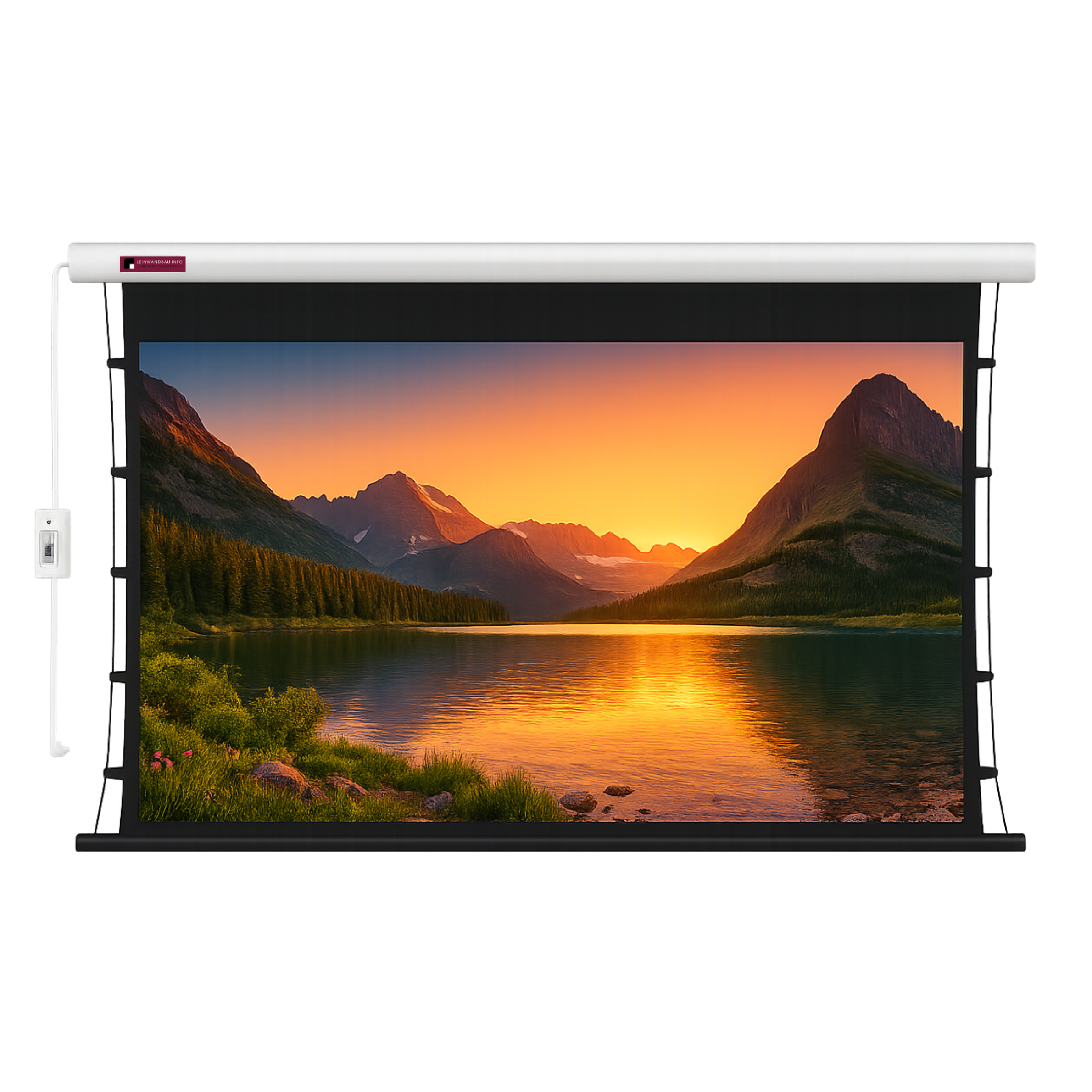
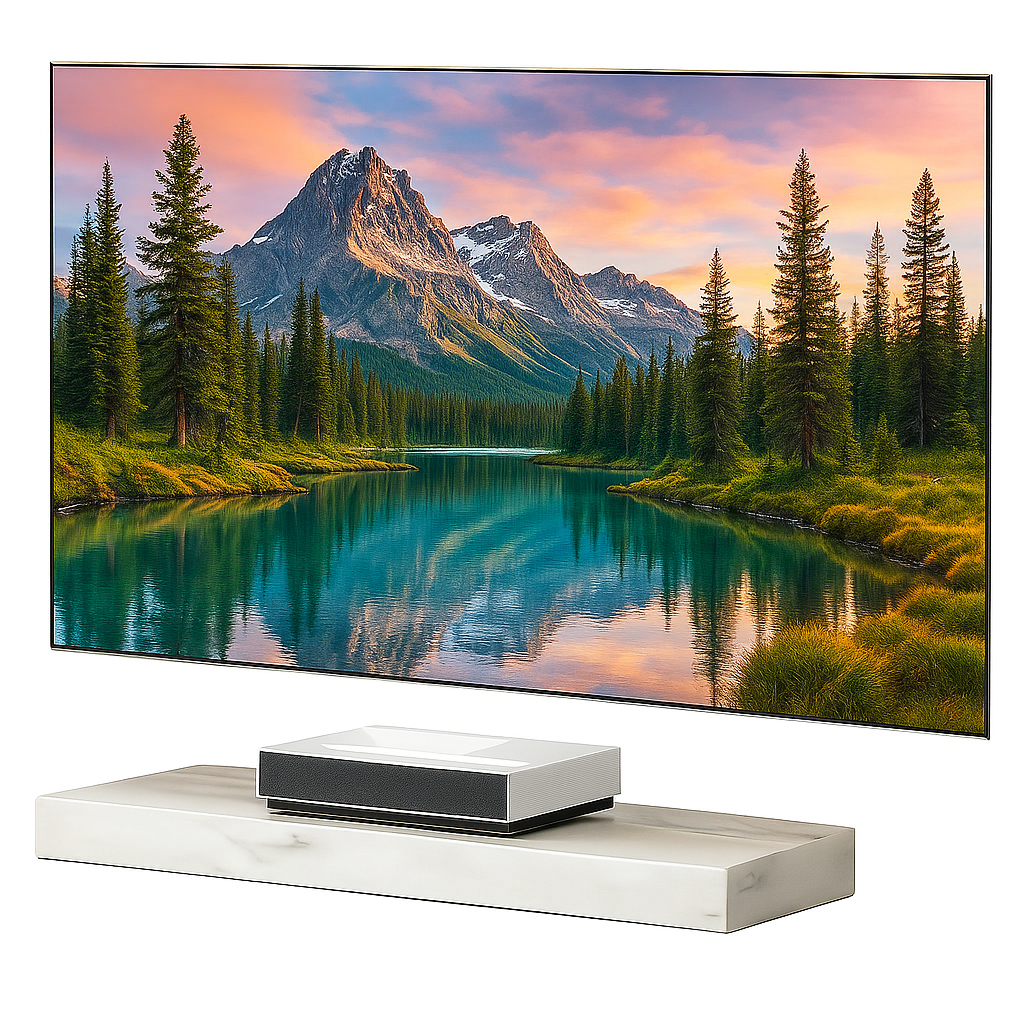
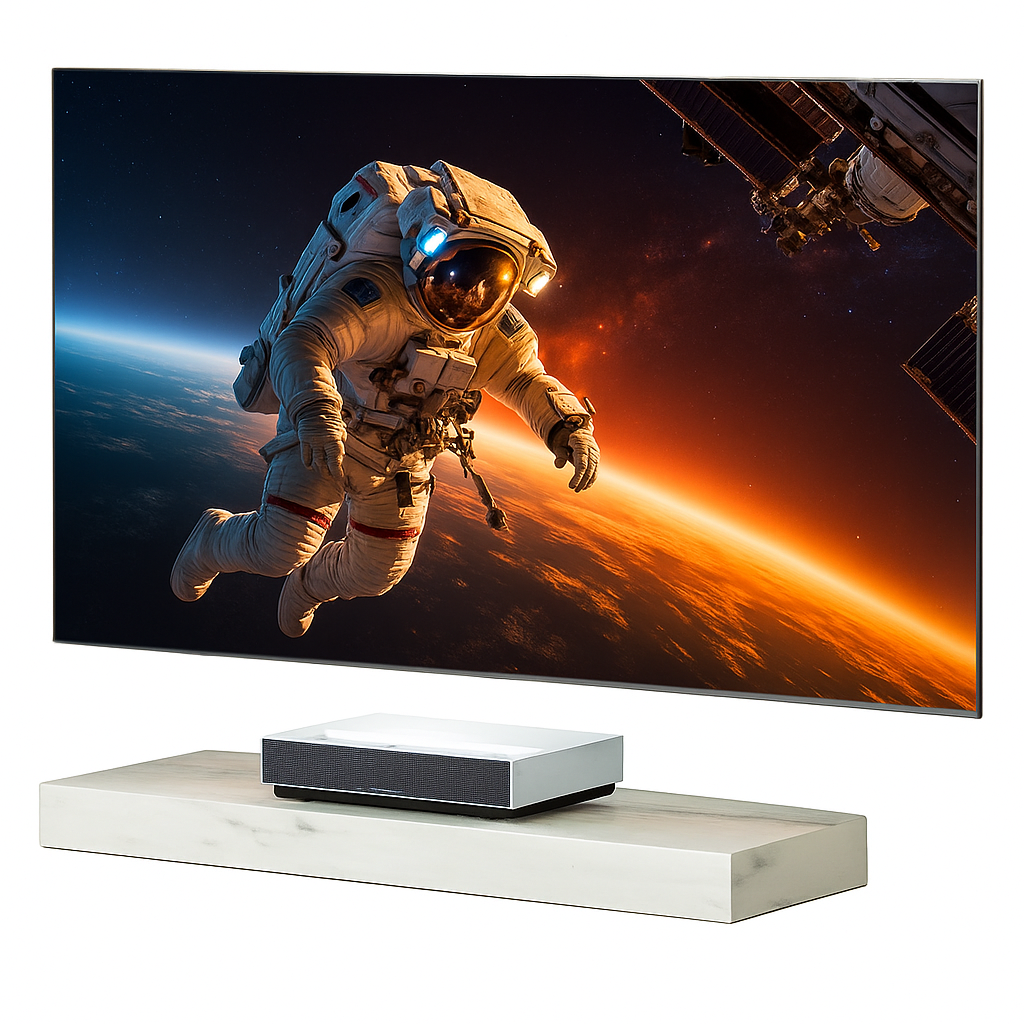
Even if a small projector can spontaneously project onto a textured wallpaper, only the right projection screen will bring out the maximum brilliance from the hardware. For mobile use outside the home, we recommend lightweight, portable pull-up screens. If you primarily want to use the projector at home in different rooms, a compact roll-up screen or an elegant fixed frame screen is the perfect addition to minimize distracting ambient light and stabilize the black levels.

{"type":"root","children":[{"type":"heading","children":[{"type":"text","value":"Versatile Applications: From Mobile Home Cinema to Spontaneous Presentations","bold":true}],"level":2},{"type":"paragraph","children":[{"type":"text","value":"\nThanks to their compact design, modern mini-projectors offer almost limitless application possibilities. They adapt flexibly to your life and are ready to use in seconds.\n\nIn private settings, they are excellent as a secondary image source. Transform your bedroom into a cozy cuddle cinema by simply projecting the image onto the ceiling, or use the projector for gaming tournaments in the basement. These lightweight devices also shine in business environments: for a spontaneous presentation to a client, you no longer need a heavy case; the projector quickly delivers sharp documents and graphics directly from a USB stick or smartphone.\n\n"}]}]}

Frequent Questions About the Mini Projector

How bright does a mini projector need to be for use in a living room?

For evening use or in a well-darkened living room, a device with approx. 500 ANSI lumens is completely sufficient to produce high-contrast images. If you want to use the projector as a full TV replacement during the day in bright daylight, the compact devices reach their physical limits.

What is the difference between a mini projector and a full-size projector?

The difference primarily lies in the dimensions, weight, and light output. Mini projectors are extremely lightweight, portable, often equipped with a battery system, and have smart operating systems for wireless operation. Full-size projectors inherently offer higher light output but are heavier and usually require a power outlet.

How large can a mini projector's image be?

Depending on the ambient light, portable projectors can project astonishingly large images onto the wall, with a diagonal of up to 100 or 120 inches. For the best possible image sharpness and crisp colours, however, the ideal range in everyday use is usually between 60 and 80 inches.

Can you use a mini projector without a screen?

Yes, this is one of the biggest advantages for flexible use on the go. A smooth, white or light grey wall is all you need to project a decent image. However, for the best possible viewing experience with optimal contrast and maximum colour accuracy, a real screen surface is always recommended.