What is a fixed frame screen?

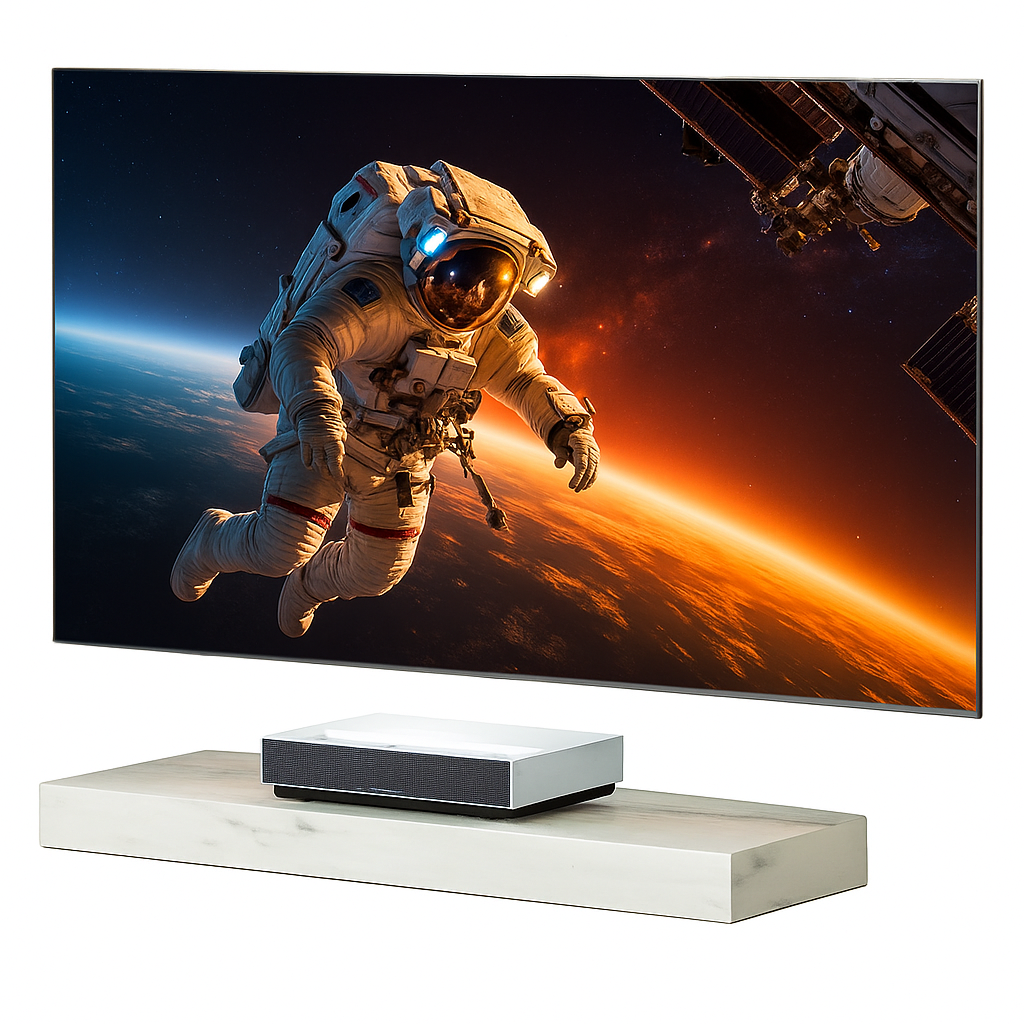
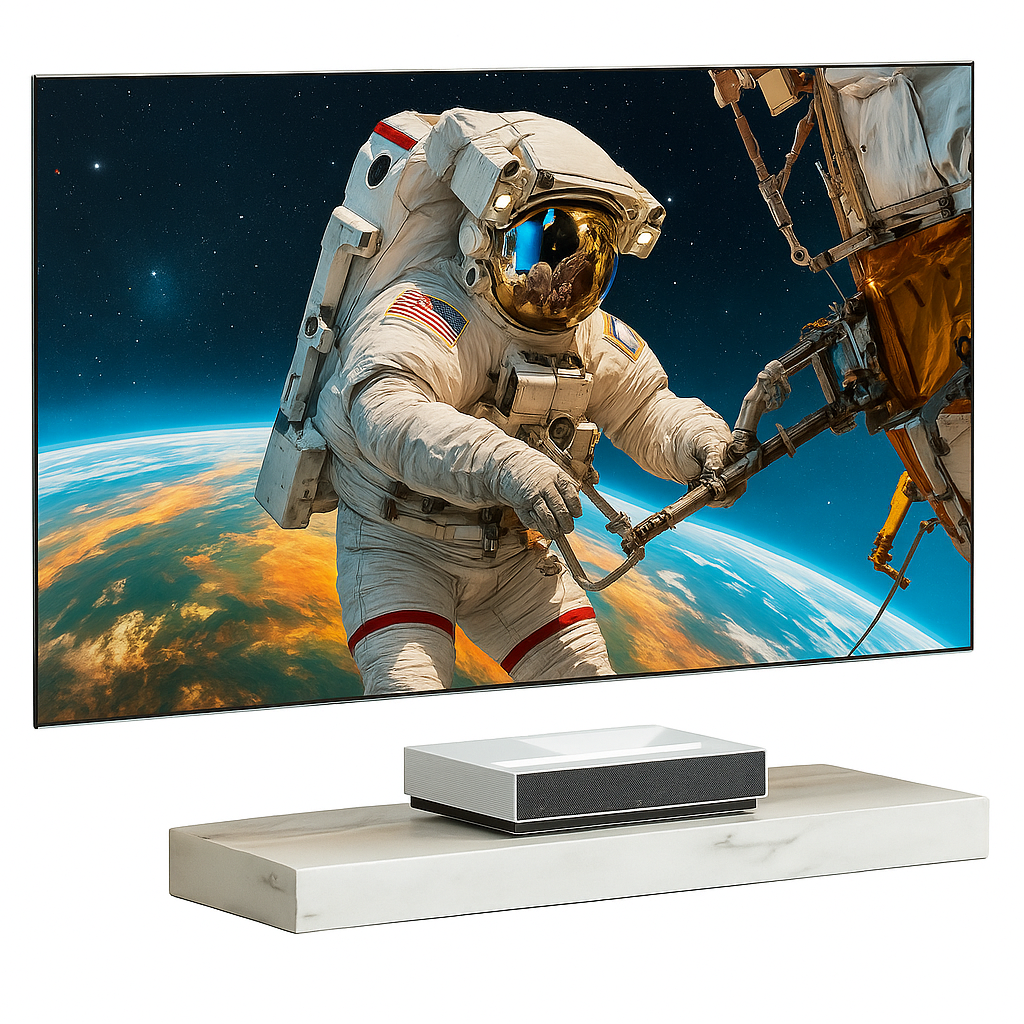
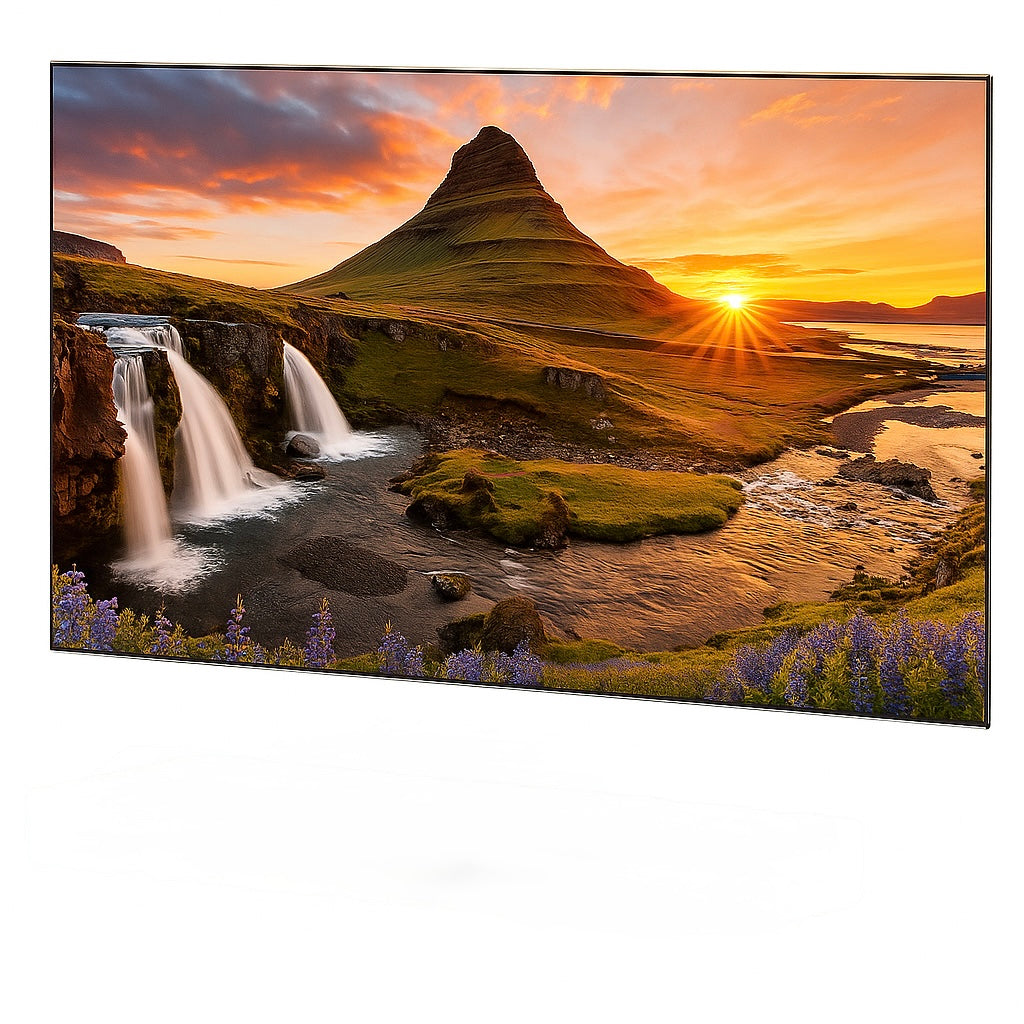
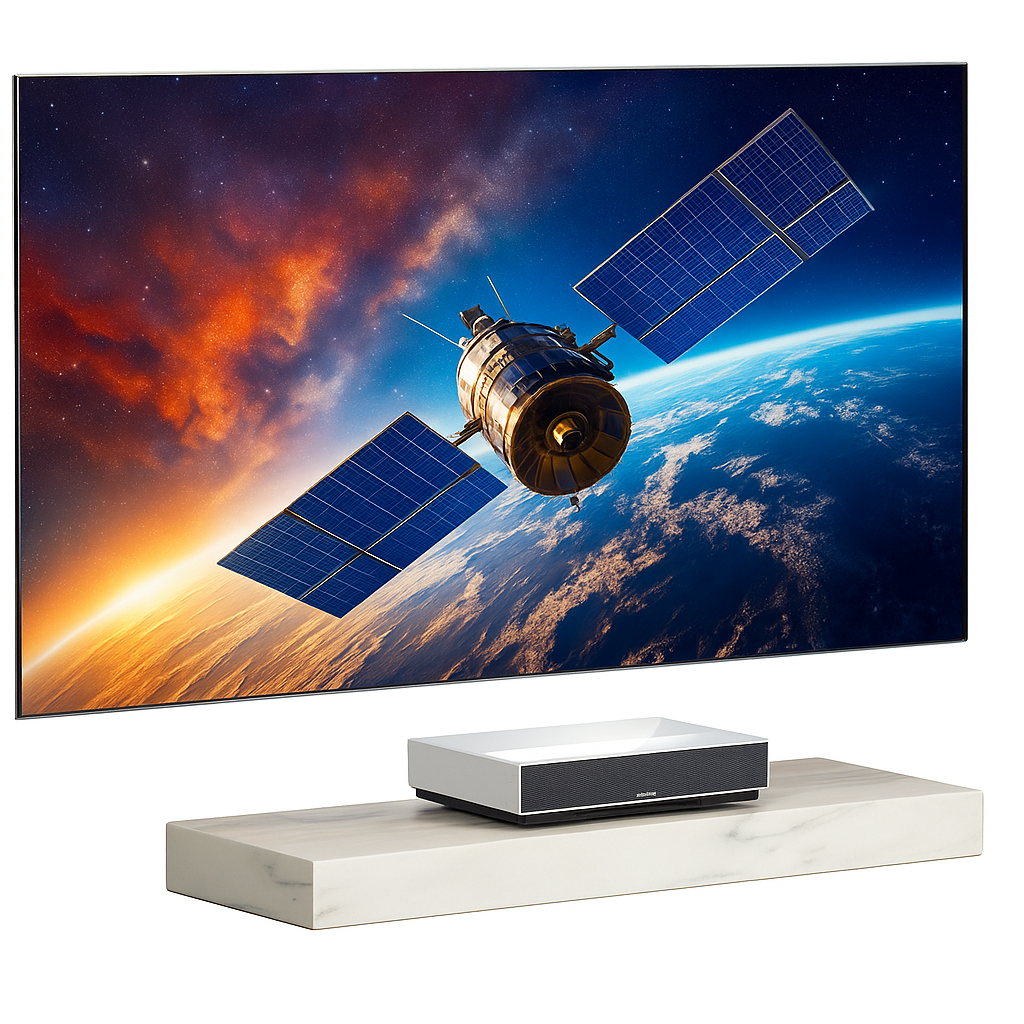
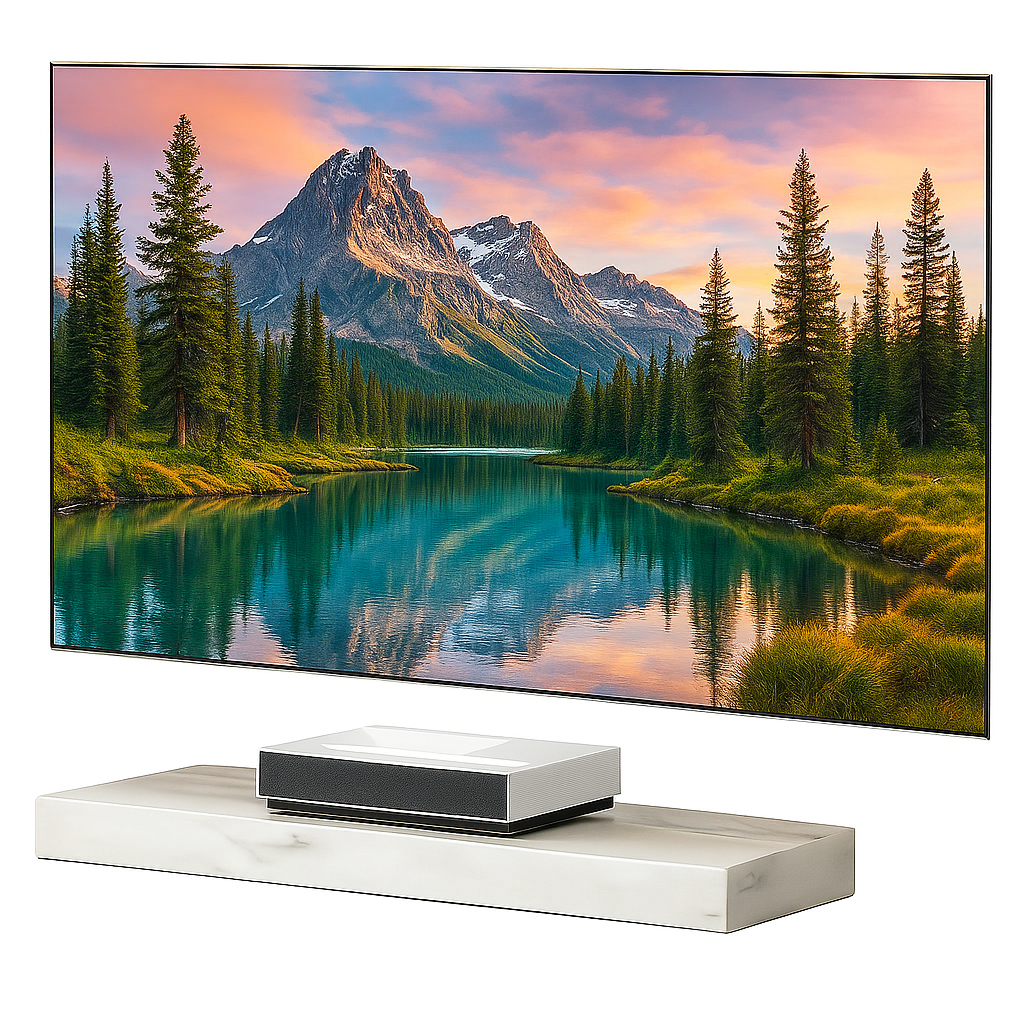
A fixed frame screen consists of a sturdy aluminum frame onto which the screen fabric is permanently stretched. There is an inner frame on which the fabric is stretched, and an outer frame that is attached around the screen for a modern design. Unlike floor or ceiling screens, it always remains flat and is ideal for uniform projection.
This fixed mounting on wall brackets not only offers excellent flatness but also an elegant appearance. The screen looks like a large-format picture on the wall with a slim frame and blends harmoniously into any modern living room, office, or home theater.

Advantages of a fixed frame screen

1. Maximum picture quality

Thanks to its perfect flatness and evenly stretched fabric, a fixed frame screen delivers impressive picture quality. It is razor-sharp, high-contrast, and color-accurate. Even in challenging lighting conditions, the image remains stable, clear, and always easily visible.

2. Stability and durability

A high-quality fixed frame screen is designed for durability. The aluminum frame ensures permanent tension and prevents wrinkles. It is ideal for regular use or permanently installed home theaters, offices, or even in the living room.

3. Flexible design

Fixed frame screens are available in many sizes, for example, as 100-inch or 120-inch versions. Sizes range from 80-inch to 150-inch. The appropriate format can be chosen depending on the room size and viewing distance. Particularly large projector installations are also possible. For 4k projection, the seating distance should be roughly 1.5 times the screen diagonal. The sharper the image, the closer one can sit to the screen.

CLR Leinwand mit hoher Bildqualität und starkem Kontrast in hellen Räumen bei Tageslicht
Vergleich normale Leinwand vs CLR Leinwand im hellen Wohnzimmer, deutlich höherer Kontrast

How to choose the right size and aspect ratio?

Planning the dimensions is crucial for later seating comfort.

  • Fixed Frame Screen 100 inches: With a picture width of approx. 221 cm, this is the ideal choice for smaller living rooms or rooms with a viewing distance of about 2.5 to 3 meters.
  • Fixed Frame Screen 120 inches: The most popular size for a modern cinema feeling at home. At a distance of around 3.5 meters, it offers perfect immersion.
  • Fixed Frame Screen 150 inches: For large halls or dedicated cinema rooms, this size is the top class. Please note that your projector must have sufficient light output to brilliantly illuminate this huge projection surface.

Regarding the format, the 16:9 standard dominates home cinema, as it is equally suitable for movies, sports, and gaming. Cinephiles alternatively opt for the 21:9 Cinemascope format.

Differences between the various fixed-frame screen versions

Depending on the lighting situation in your room, we offer specialized screen types.

ALR and CLR: High contrast for bright rooms

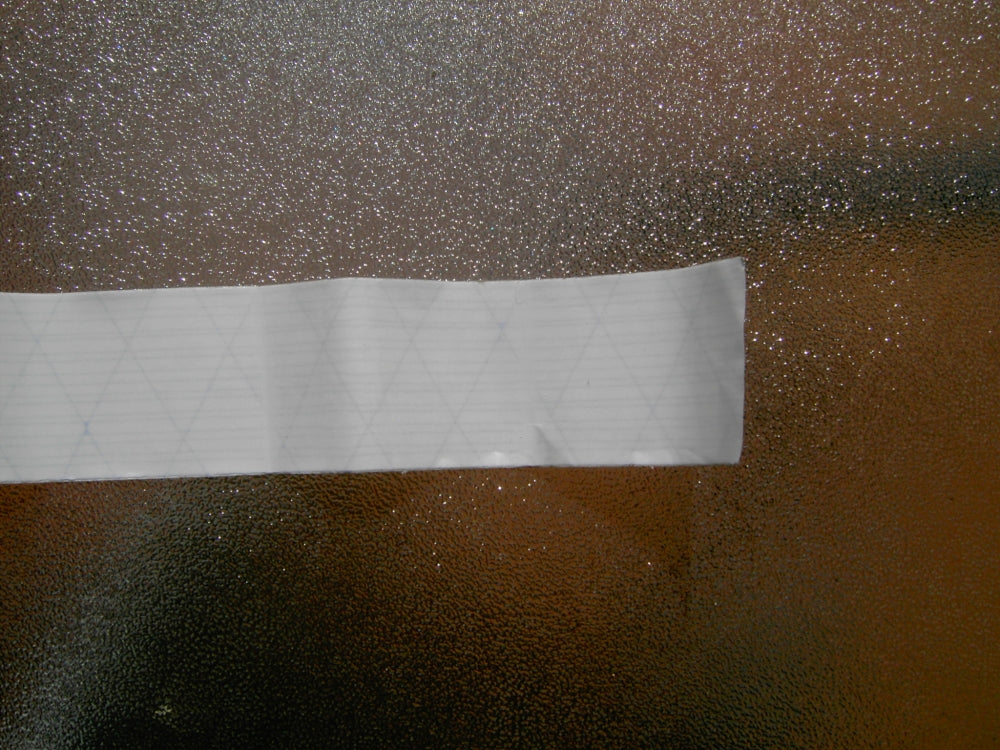
In modern living rooms with a lot of ambient light or stray light, a classic white screen is often overwhelmed. This is where ALR (Ambient Light Rejecting) and CLR (Ceiling Light Rejecting) screens truly shine. These screens use a special coating and surface structure that absorbs distracting light from the side or ceiling, reflecting only the projection light precisely to the viewer. The result is brilliant, high-contrast images even under challenging conditions.

White fabric vs. gray fabric

The classic matte-white fabric offers the most accurate color reproduction in completely darkened rooms. A gray fabric, on the other hand, is an excellent compromise to improve black levels in brightly painted rooms without directly investing in an expensive high-contrast solution.

Mounting and placement of the fixed-frame screen in the home cinema

Despite its size, mounting a fixed-frame screen is straightforward for skilled users. Most models are delivered as a kit, with the fabric only being stretched onto the frame on-site. When installing it on the wall, you should ensure that the viewers' eye level is approximately in the lower third of the image. Thanks to the slim design of modern profiles, the systems also blend very elegantly into the room's ambiance.

Which room is best suited for a fixed frame screen?

It is ideal for home theater enthusiasts who want a permanent projection surface. It is best suited for dedicated cinema rooms or living rooms where the screen can remain on the wall as a permanent design element.

What is the difference between a fixed frame screen and a pull-down screen?

The main difference lies in the flatness. While a roll-down screen can be retracted, the permanently installed frame screen offers significantly better image stability without any waves due to the constant mechanical tension.

What frame screen size is ideal for a home theater?

This depends largely on the room size and seating distance. For most users, a diagonal of 120 inches (approx. 265 cm image width) is the perfect compromise between immersion and space requirements.

Can a fixed frame screen also be used in daylight?

Yes, provided you opt for a version with a special ALR or CLR high-contrast fabric. These surfaces are optimized to absorb distracting ambient light and to reflect only the light from the projector precisely to the viewer.