Screen for Projector
The heart of any professional home cinema
is undoubtedly the projection surface. While much attention is often paid to the
projector itself during planning, a high-quality projector home cinema screen is
at least as crucial for the final image quality. Only when the screen fabric is
optimally matched to the projector's light output and the individual lighting
conditions in the room can the technology unfold its full potential in 4k, 8k or
4k pro-uhd. At Leinwandbau.info, we support you with technical expertise to find
the exact solution that transforms your living room or dedicated home cinema
room into an immersive world of experience. Learn in this guide what really
matters when buying and why choosing the right screen makes the difference
between a pale image and true cinema magic.


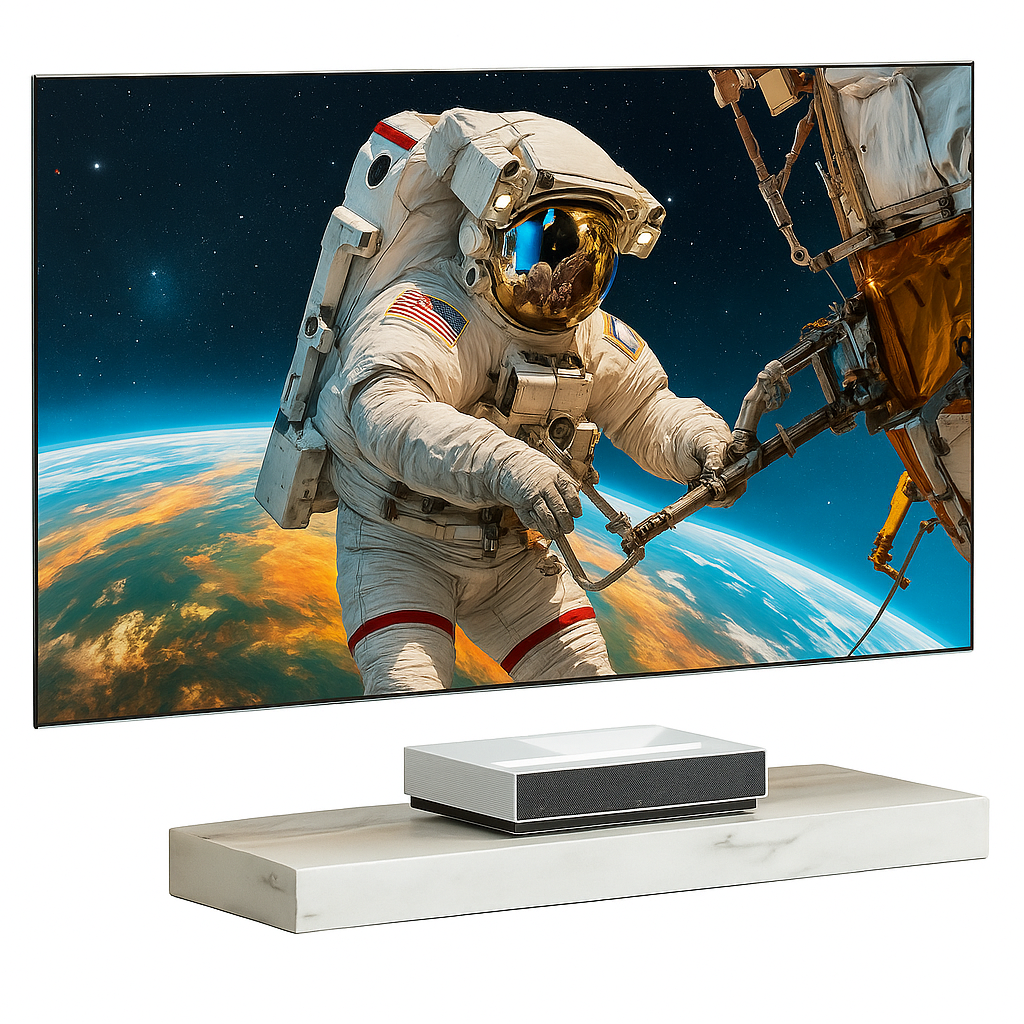
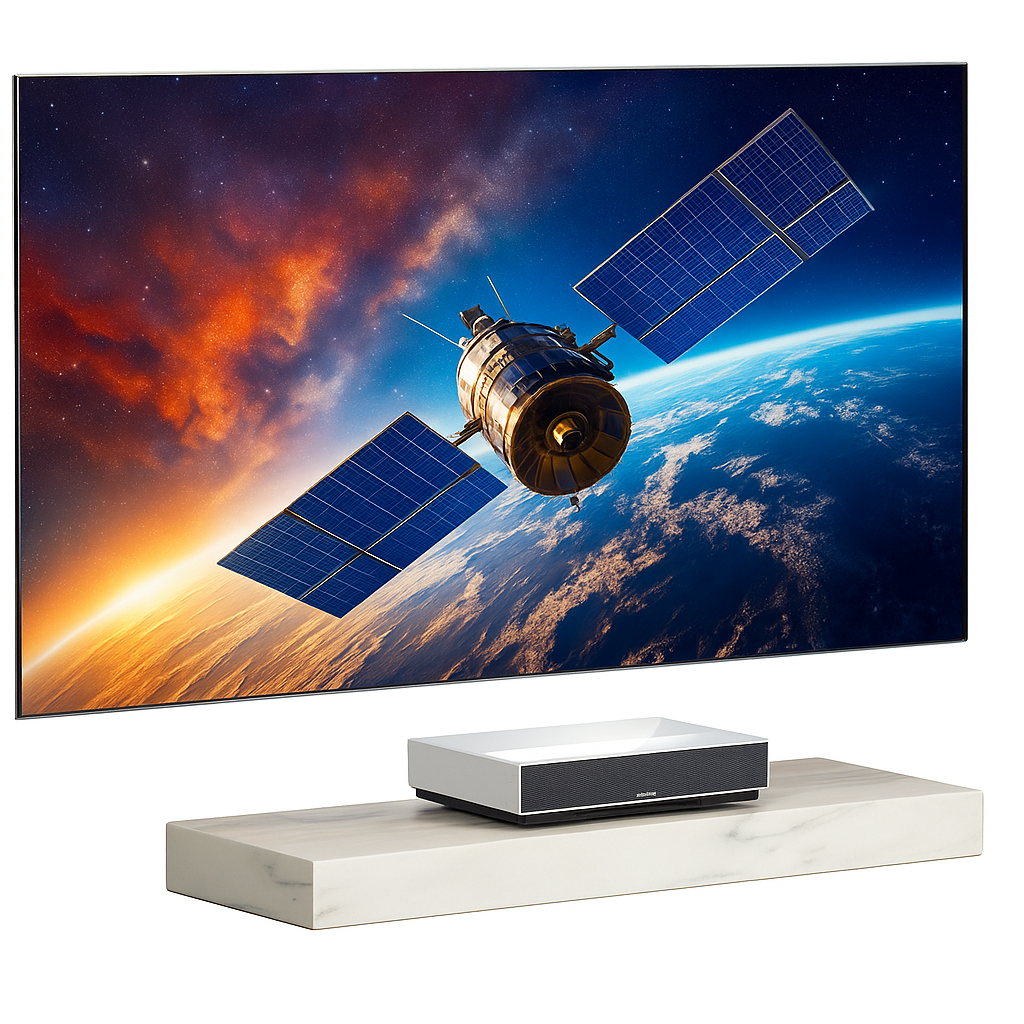

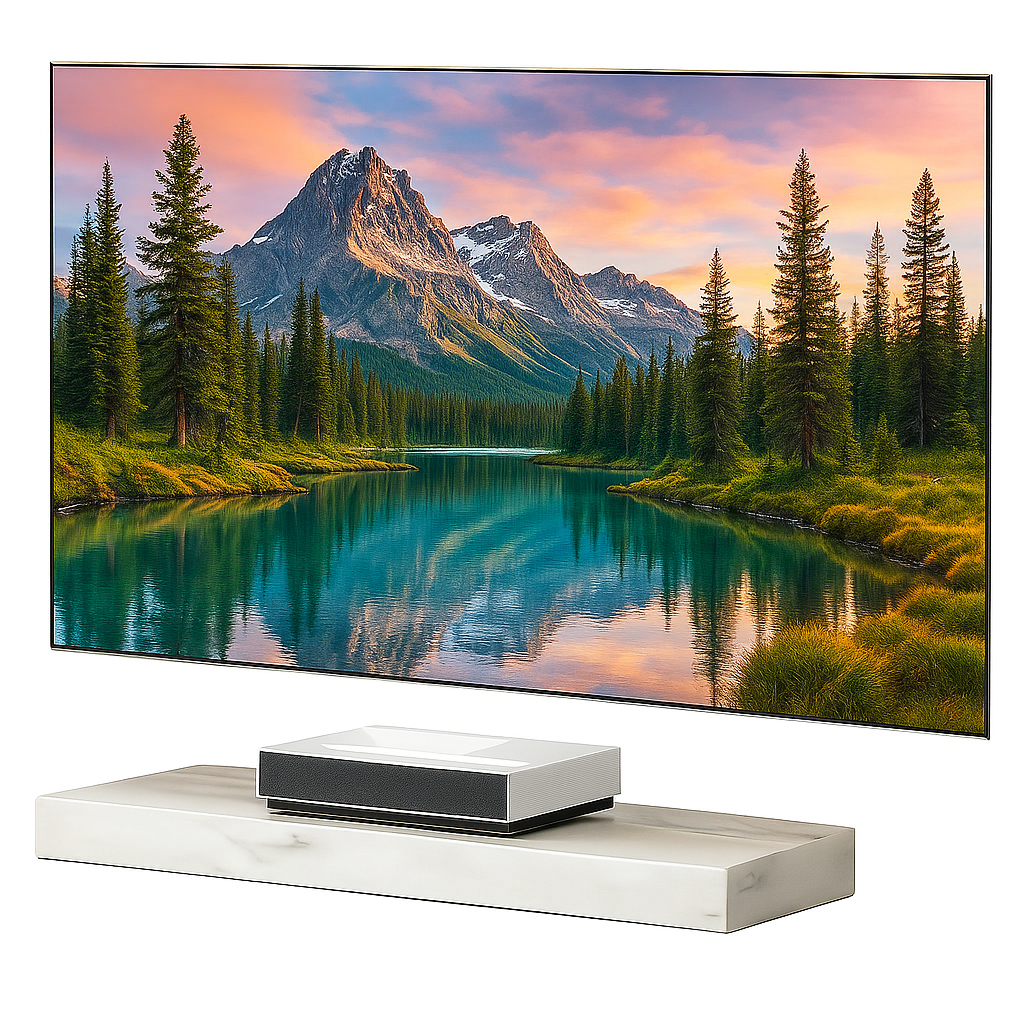
What really matters when choosing a projector screen for home theater?
The selection of projection surfaces is more diverse today than ever before. To make the right choice, we need to look at the technical factors that distinguish a high-quality projector home cinema screen from simple standard solutions. A professional projection surface not only serves as a passive background but actively optimizes the reflected light to ensure high-contrast images and natural color fidelity.
The Importance of Fabric Quality and Surface Structure
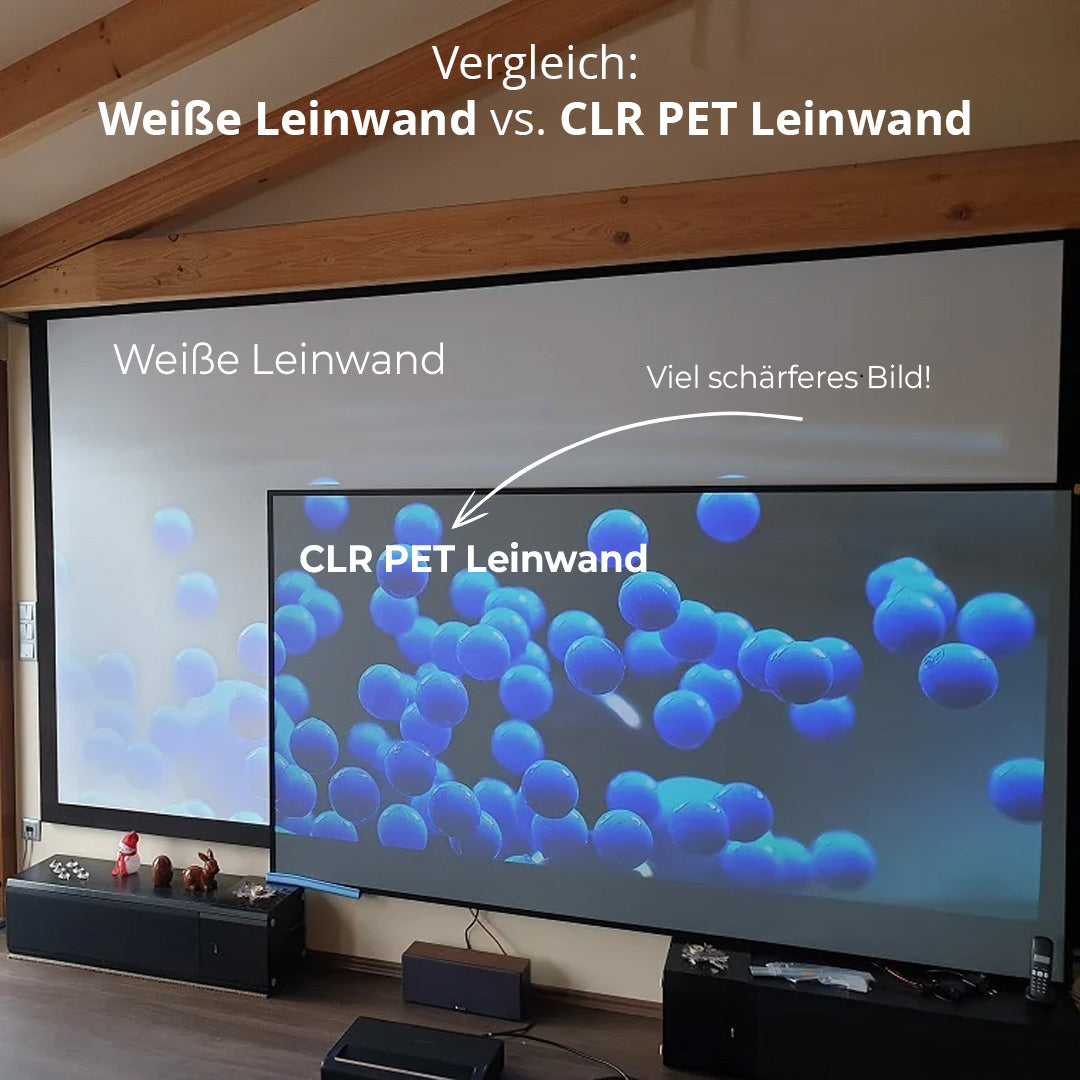
A crucial aspect for a razor-sharp viewing experience is the fabric's structure. High-resolution projections in 4k or 8k require an extremely fine surface finish. Coarsely structured fabrics can lead to the so-called moiré effect, where the pixel structure of the projector overlaps with the weave structure of the fabric, severely impairing image sharpness. Our high-quality screen fabrics are optimized to reproduce even the smallest details without interference.
The Gain Factor: Light Output and Viewing Angle
The gain value describes a screen's reflection behavior. A gain of 1.0 is considered the neutral standard; it reflects light evenly in all directions, thus allowing for a very wide viewing angle. In rooms with a lot of ambient light or with lower-brightness projector models, a higher gain factor can be useful to subjectively increase image brightness. Conversely, many home cinemas use special high-contrast screens with a gain below 1.0 to optimize black levels and make the cinema experience more vivid.
Lay-flat and the Tension rope tensioning system
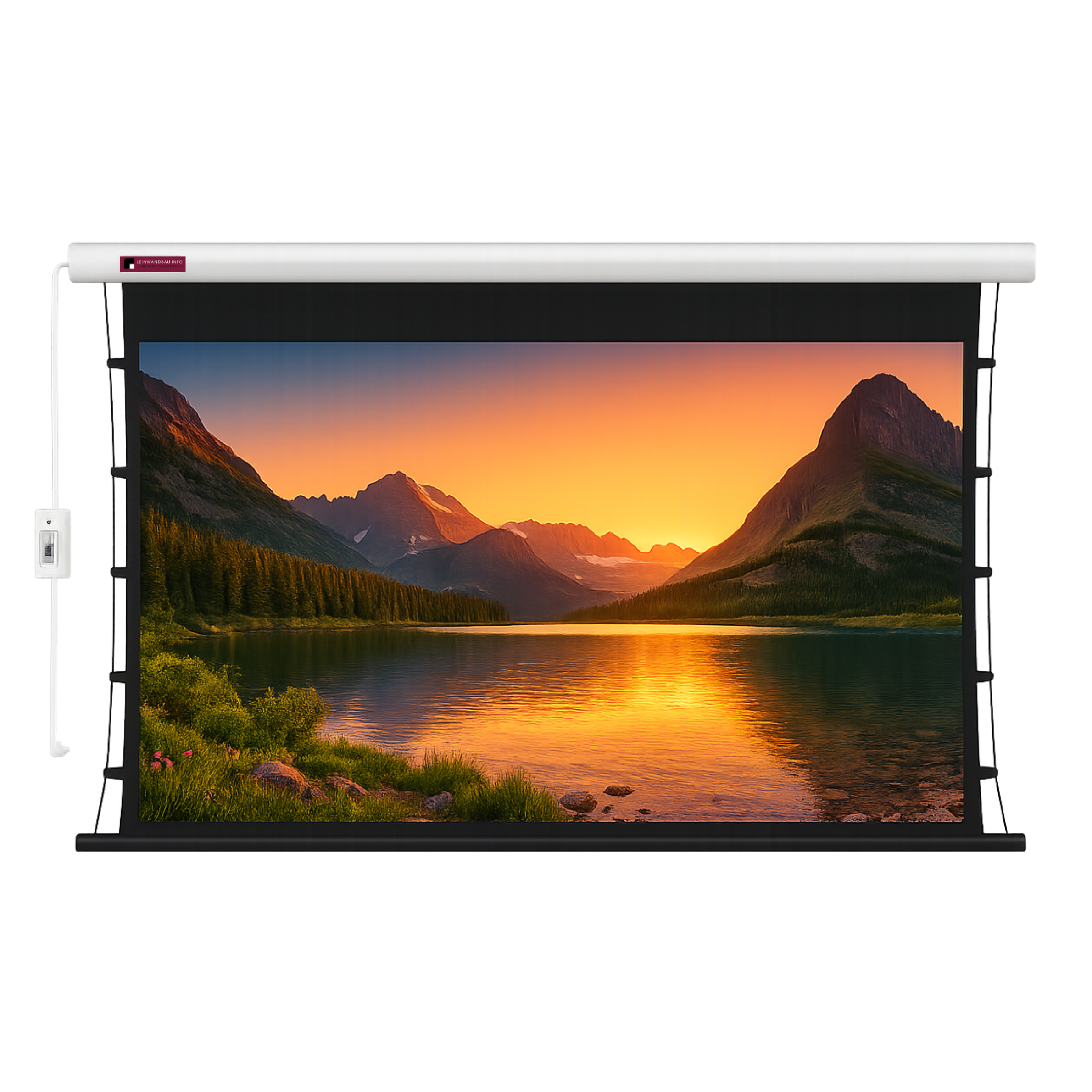
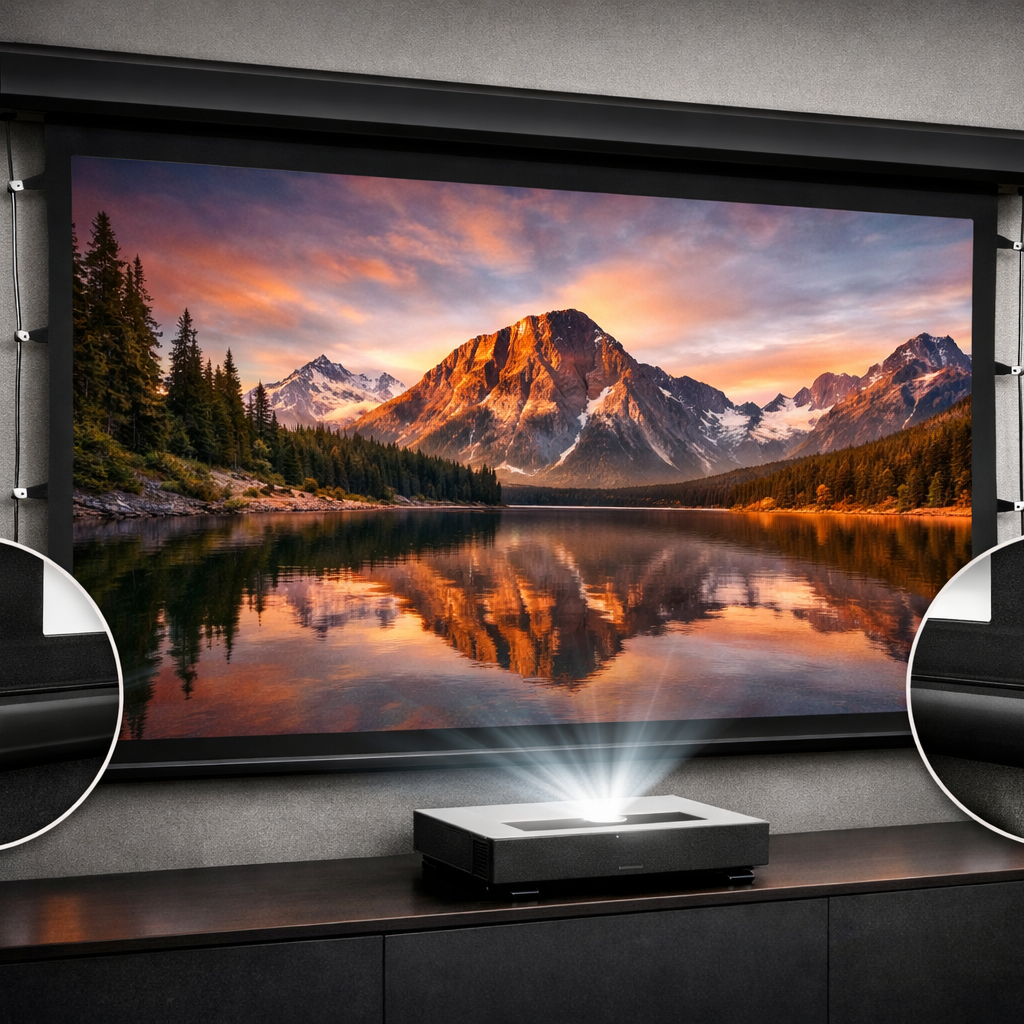
Nothing disrupts a film's immersion more than waves or wrinkles in the image. While a fixed-frame screen always offers perfect flatness due to its design, motorized screen systems face a greater challenge. This is where the tensioning system (Tension) comes into play. Laterally attached cords pull the fabric taut, creating an absolutely flat surface. This is particularly essential for v2.0 ultra-short-throw projectors, as their steep projection angle would immediately reveal even the slightest imperfections through shadows.
The Importance of Fabric Quality and Surface Structure
A crucial aspect for a razor-sharp viewing experience is the fabric's structure. High-resolution projections in 4k or 8k require an extremely fine surface finish. Coarsely structured fabrics can lead to the so-called moiré effect, where the pixel structure of the projector overlaps with the weave structure of the fabric, severely impairing image sharpness. Our high-quality screen fabrics are optimized to reproduce even the smallest details without interference.
The Gain Factor: Light Output and Viewing Angle
The gain value describes a screen's reflection behavior. A gain of 1.0 is considered the neutral standard; it reflects light evenly in all directions, thus allowing for a very wide viewing angle. In rooms with a lot of ambient light or with lower-brightness projector models, a higher gain factor can be useful to subjectively increase image brightness. Conversely, many home cinemas use special high-contrast screens with a gain below 1.0 to optimize black levels and make the cinema experience more vivid.
Lay-flat and the Tension rope tensioning system
Nothing disrupts a film's immersion more than waves or wrinkles in the image. While a fixed-frame screen always offers perfect flatness due to its design, motorized screen systems face a greater challenge. This is where the tensioning system (Tension) comes into play. Laterally attached cords pull the fabric taut, creating an absolutely flat surface. This is particularly essential for v2.0 ultra-short-throw projectors, as their steep projection angle would immediately reveal even the slightest imperfections through shadows.

How to choose the right screen size?
Choosing the right screen starts with the dimensions. A screen that is too large can overwhelm a small room, while one that is too small will not create the desired immersive feeling.
The optimal viewing distance for 4K and Full HD
A common rule of thumb for a modern home cinema is that the viewing distance should be approximately 1.2 to 1.5 times the image width. For a 120-inch screen (approx. 265 cm image width), a distance of around 3.20 to 4.00 meters would be ideal. Thanks to the high resolution of modern projectors, you can now sit much closer to the image without seeing individual pixels, which massively increases immersion.
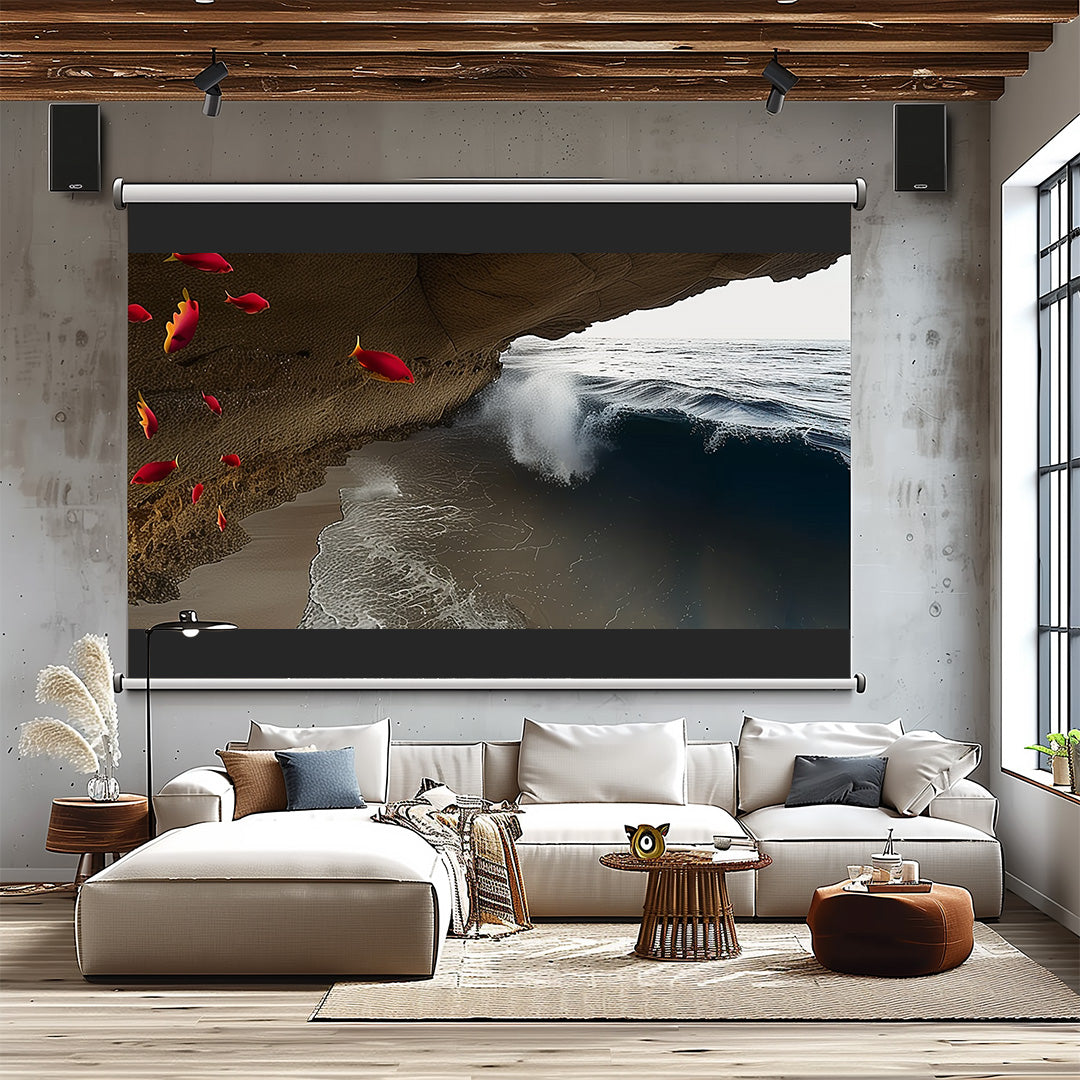
Image Formats: 16:9 or 21:9?
Most home cinema users opt for the classic 16:9 format, as it is the standard for TV series, sports broadcasts, and gaming. Film enthusiasts who exclusively watch feature films often prefer the wider 21:9 (Cinemascope) format to avoid black bars in Hollywood productions. When planning, you should also consider the black border (masking), which significantly improves the subjective contrast at the image edge.
Space Requirements and Wall Mounting vs. Ceiling Mounting
Before ordering your electric projector screen, measure the available space down to the millimeter. Consider not only the visible projection surface but also the width of the screen housing. In many home cinemas, wall or ceiling mounting is flexibly possible. If you desire a particularly discreet integration, ceiling installation is the perfect screen solution, where the housing completely disappears into a suspended ceiling.
Differences Between the Various Canvas Types
Every home cinema room has its own requirements. Whether you are looking for a pull-down screen, a motorised version, or a permanently installed solution determines the comfort and image quality in everyday use.


Electric Projector Screens: Luxury and Convenience at the Touch of a Button
An electric projector screen offers the ultimate in operating convenience. Via remote control or an automated trigger, the screen extends from its housing as soon as the projector is started. High-quality motors ensure quiet and smooth operation. These models are ideal for the living room, as they are barely noticeable when not in use and free up valuable wall space for pictures or the television.
Fixed Frame Screen: The Technical Reference for Enthusiasts
The fixed frame screen is the first choice for any dedicated home theater. The fabric is permanently stretched tightly over an aluminum frame, guaranteeing a lifetime of perfect flatness without wear and tear from mechanics. It often offers the best color fidelity and is available in various fabric types such as acoustic weave (for speakers behind the screen) or high-contrast materials.

CLR Screen: The Revolution for Laser TVs in the Living Room
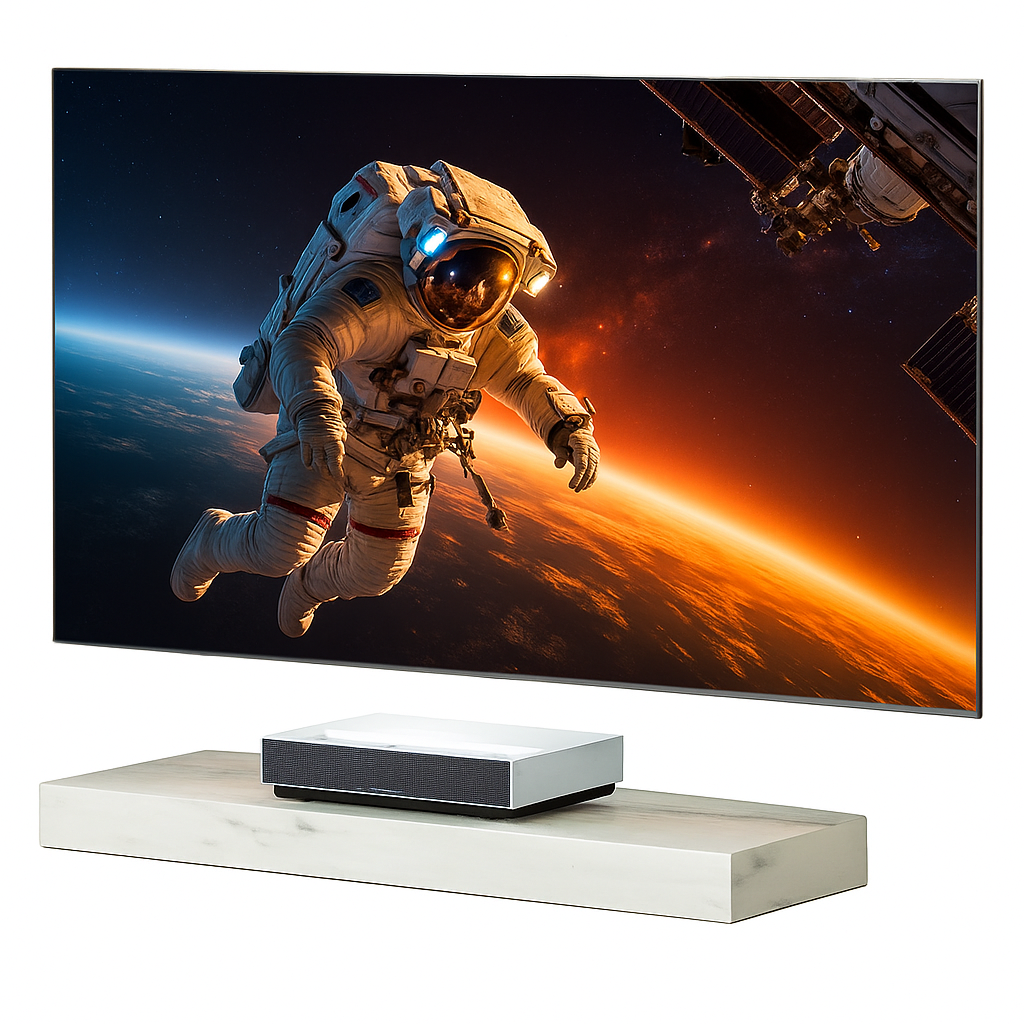
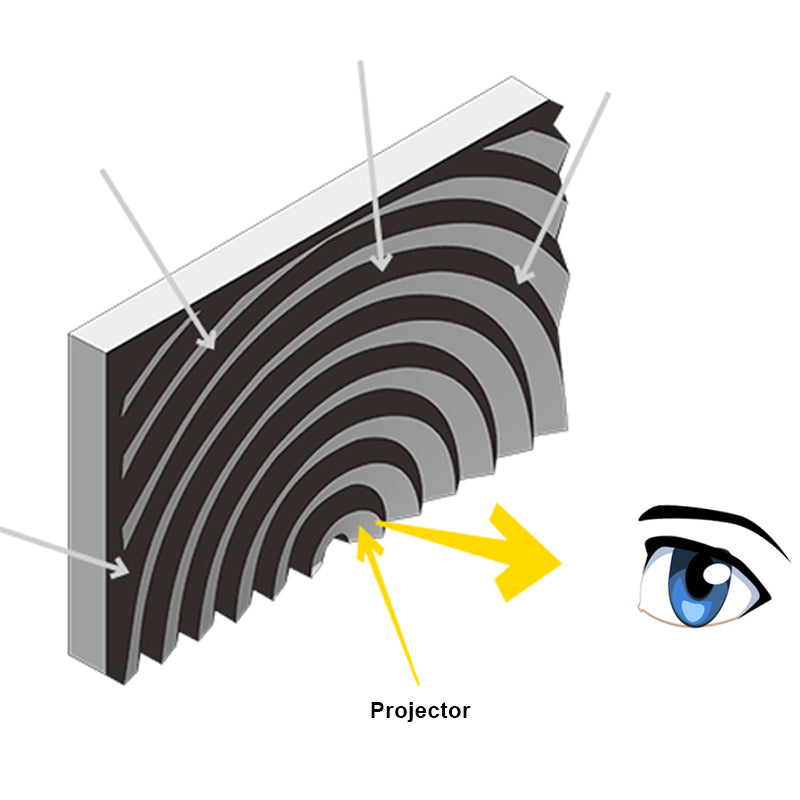
A CLR (Ceiling Light Rejecting) screen is a specialized high-contrast screen developed for UST (Ultra-Short Throw) projectors. Thanks to a microscopic louver structure, it absorbs distracting light from above (e.g., ceiling lights) and only directs the projector's light from below to the viewer. This makes it the ideal daylight screen, as it delivers an image even in bright rooms that challenges conventional TVs in terms of black level and brilliance.
Manual Pull-Down Screens and Mobile Solutions
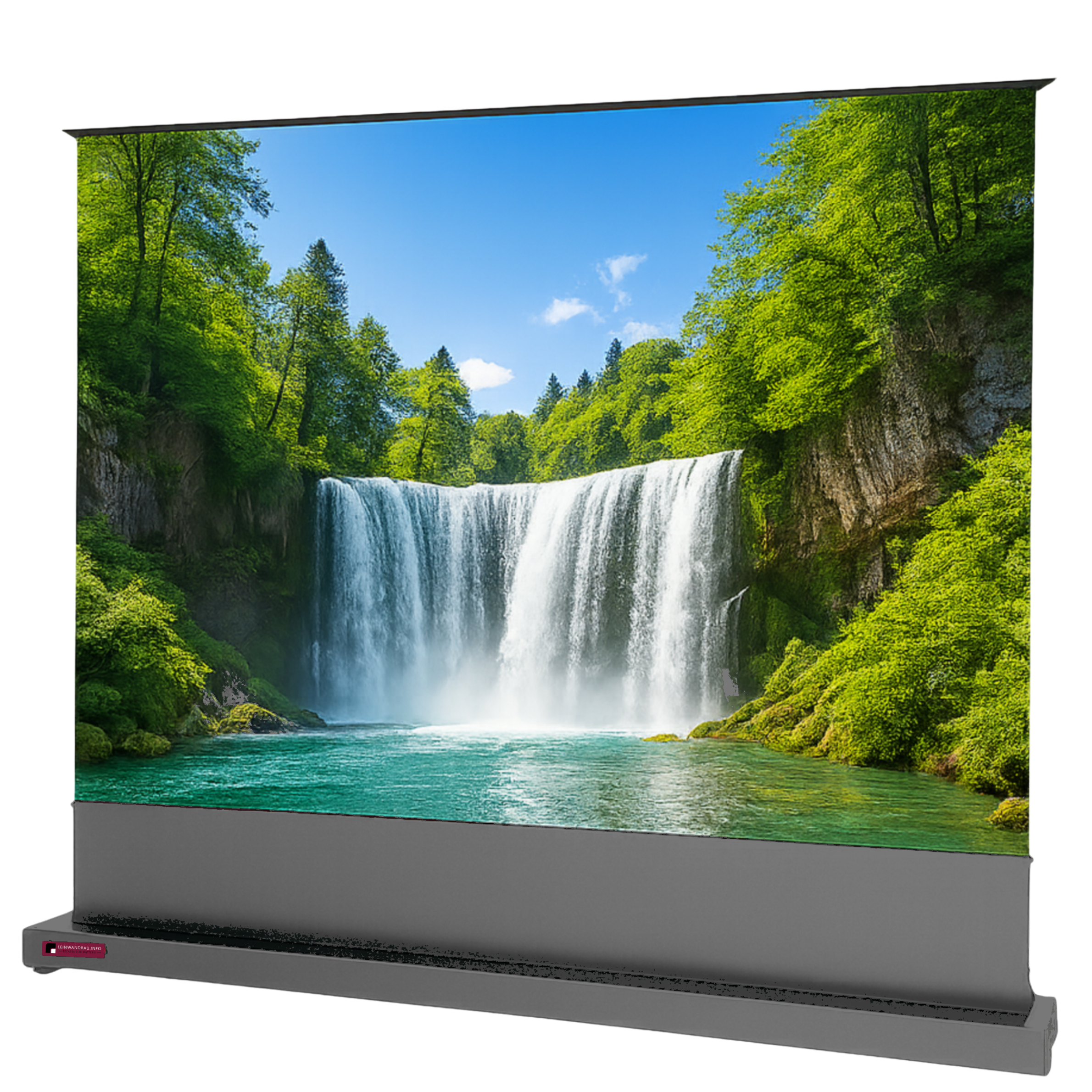
The classic pull-down screen is the affordable entry-level solution. It is manually operated and easy to install. For users who want to remain flexible, we also offer a large selection of floor screens or portable tripod screens. These are excellent for a presentation in the office or a spontaneous movie night with friends.
Canvas Assembly and Placement
The best high-quality projection solution is of little use if the installation has not been carried out correctly. Careful planning prevents reflections and ensures a relaxed viewing angle.
Optimal Height and Viewing Angle
The bottom edge of the screen should ideally be at the eye level of seated viewers or only slightly above. A setup that is too high quickly leads to neck pain and diminishes the cinema experience. Also, make sure that no objects or furniture block the projector's light path.
Dealing with Ambient Light and Brightness
Ambient light from bright walls or ceilings can severely degrade the black level of your projection. In a dedicated home cinema room, we therefore recommend dark colors for walls and ceilings. In the living room, where this is often not possible, ALR (Ambient Light Rejecting) or CLR screens are the best choice to achieve a vivid image despite light in the room.
Smart Home Integration
Modern electric screens can be easily integrated into home automation systems. Via radio or infrared controls, the entire movie night can be prepared with just one push of a button: the lights dim, the blinds close, and the screen silently descends.
FAQ
What is the ideal screen size for a home theater?
The ideal size primarily depends on your seating distance. A very popular size for modern home cinema is a diagonal of 100 to 120 inches, provided the room allows for an image width of approximately 2.20 to 2.70 meters.
Which canvas is suitable for a living room?
For a living room that cannot be completely darkened, a CLR screen or a high-contrast ALR screen is ideal, as it effectively minimizes ambient light. An electric projector screen also offers the advantage of disappearing invisibly into the screen housing when not in use.
What does the gain factor mean for a projection screen?
The gain factor describes how intensely the incident light is bundled and reflected towards the viewer. A value of 1.0 reflects light evenly in all directions, while higher values increase brightness (at the expense of viewing angle) and lower values improve black levels.
Can a projector screen be used in daylight?
Yes, with the right technology, that is possible. Special daylight screens (like CLR or ALR) are designed to absorb light from the sides and above, so that a high-contrast image remains visible even in brighter environments. However, the darker the room, the better the final image quality.