Projector Screens | Everything for Your Home Cinema
Those who invest in a high-quality home cinema usually attach great importance to choosing the right projector. However, an often underestimated truth is: The projected image can only be as good as the surface on which it is displayed. A specialized projector screen is not a passive accessory, but an active optical component that determines contrast, color fidelity, and image sharpness. Whether you are planning a classic movie night, enjoying 4k or 8k gaming, or conducting professional presentations – only the right projector screen turns a light projection into a true visual experience. At Leinwandbau.info, we support you with technical expertise and sound purchasing advice so that you can find the projector screen solution that perfectly suits your premises, your equipment, and your individual cinema experience.
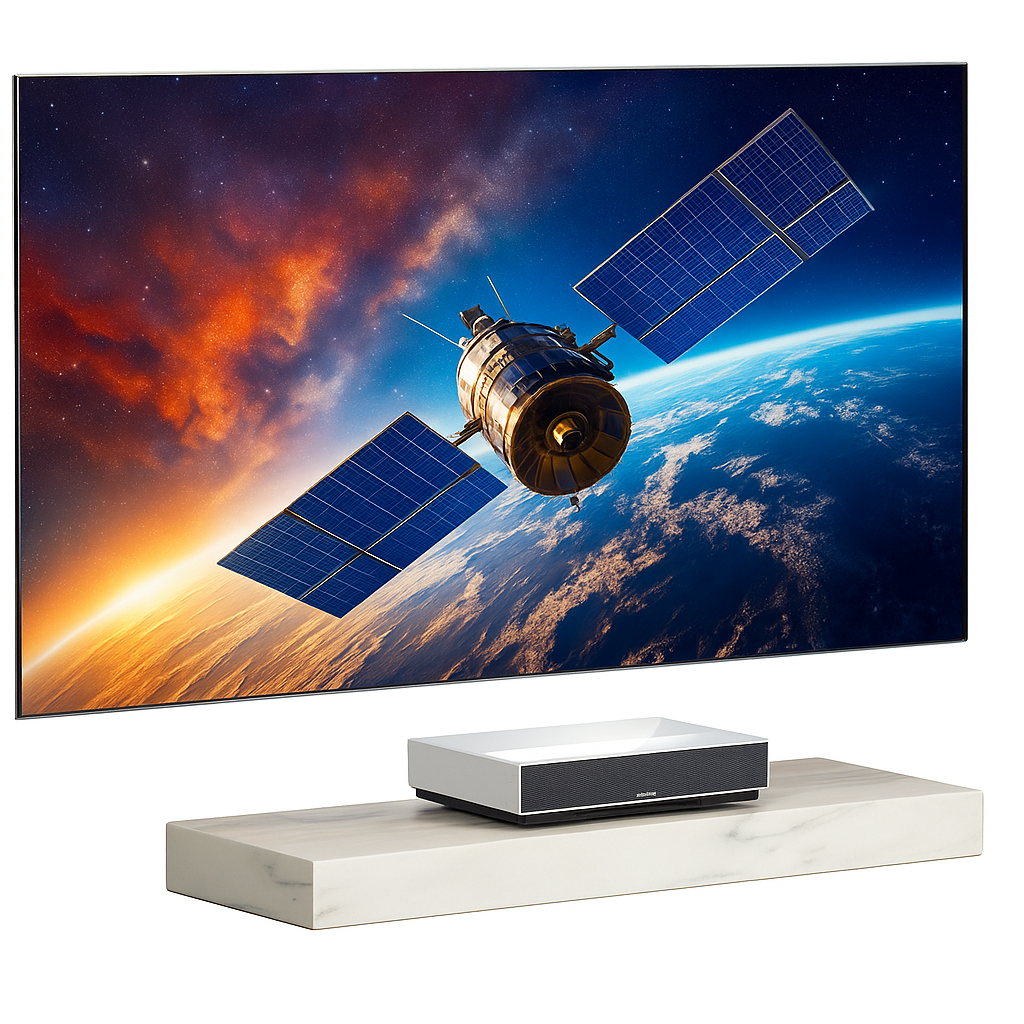
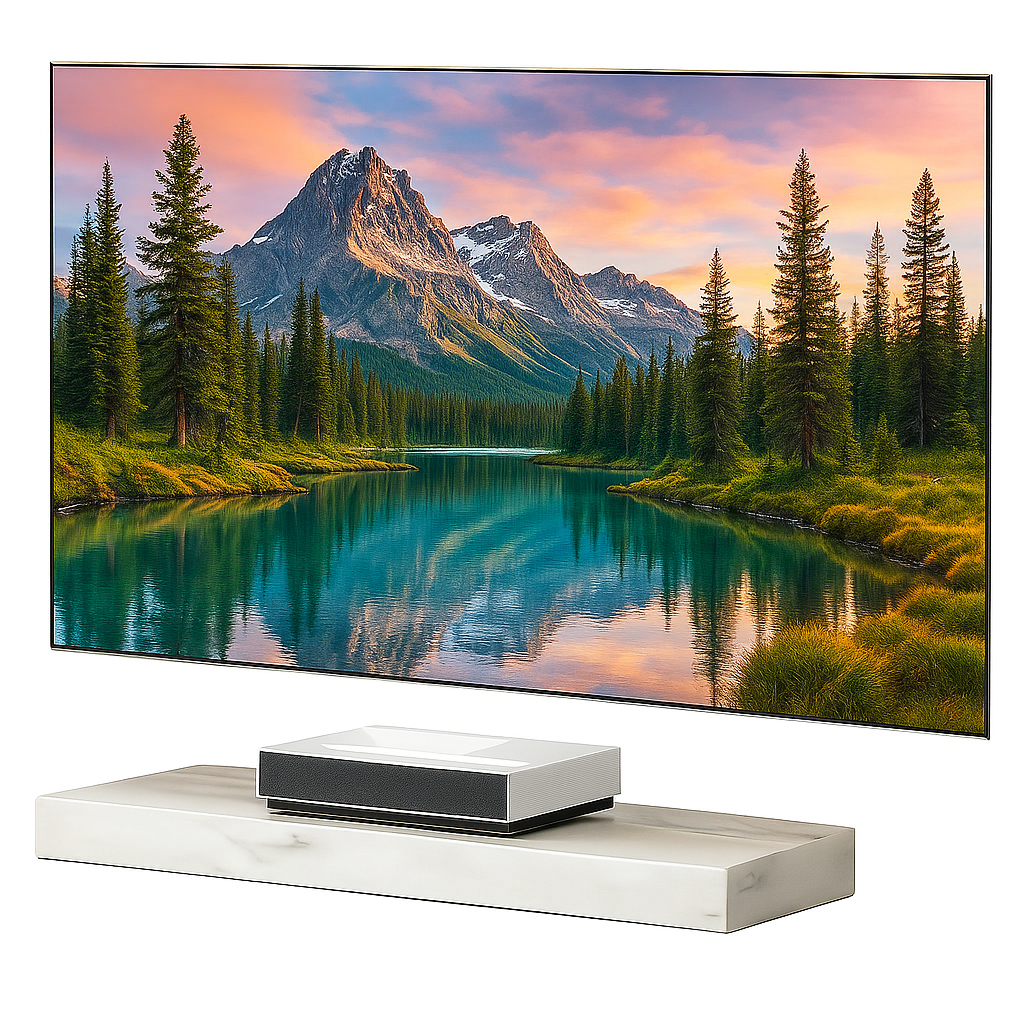

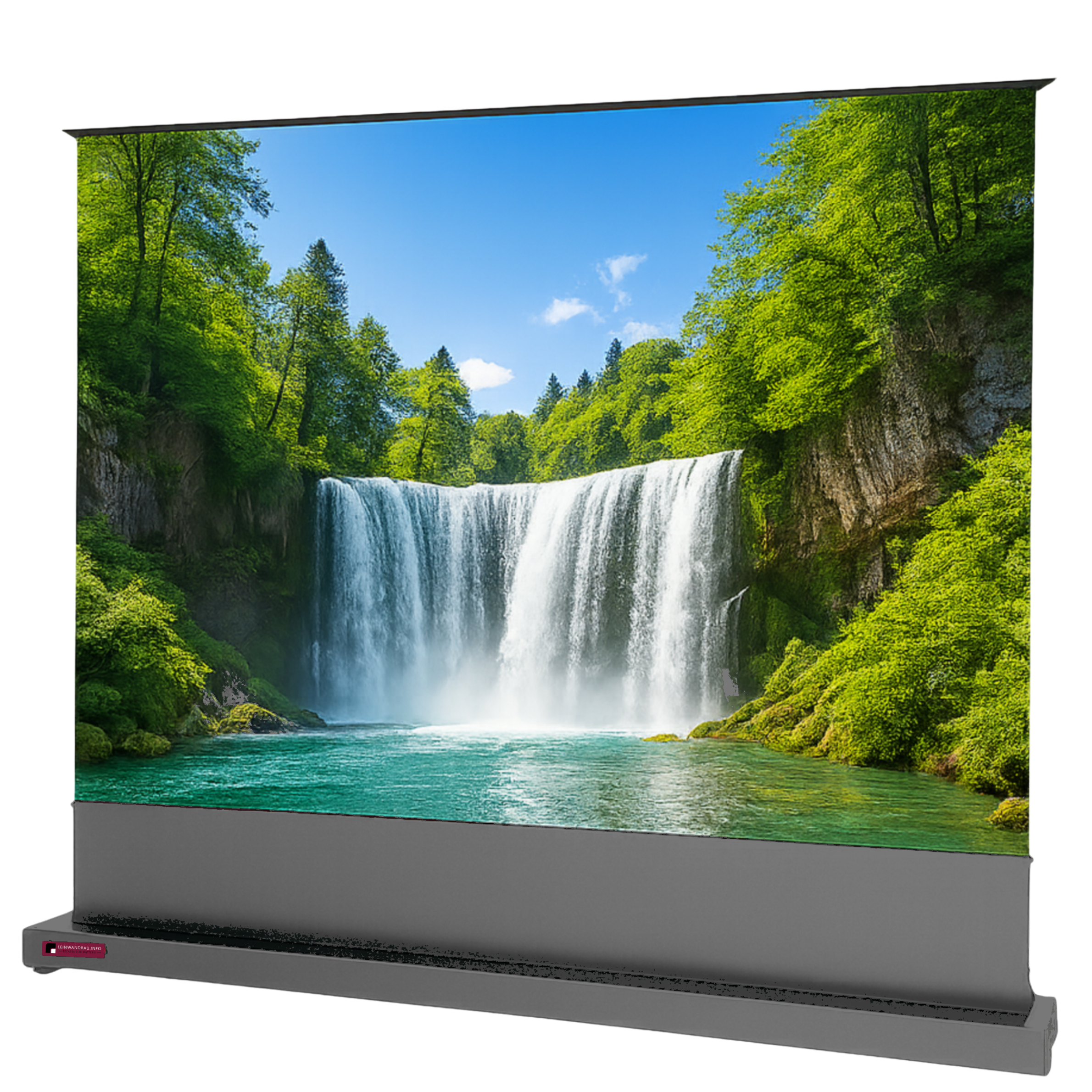
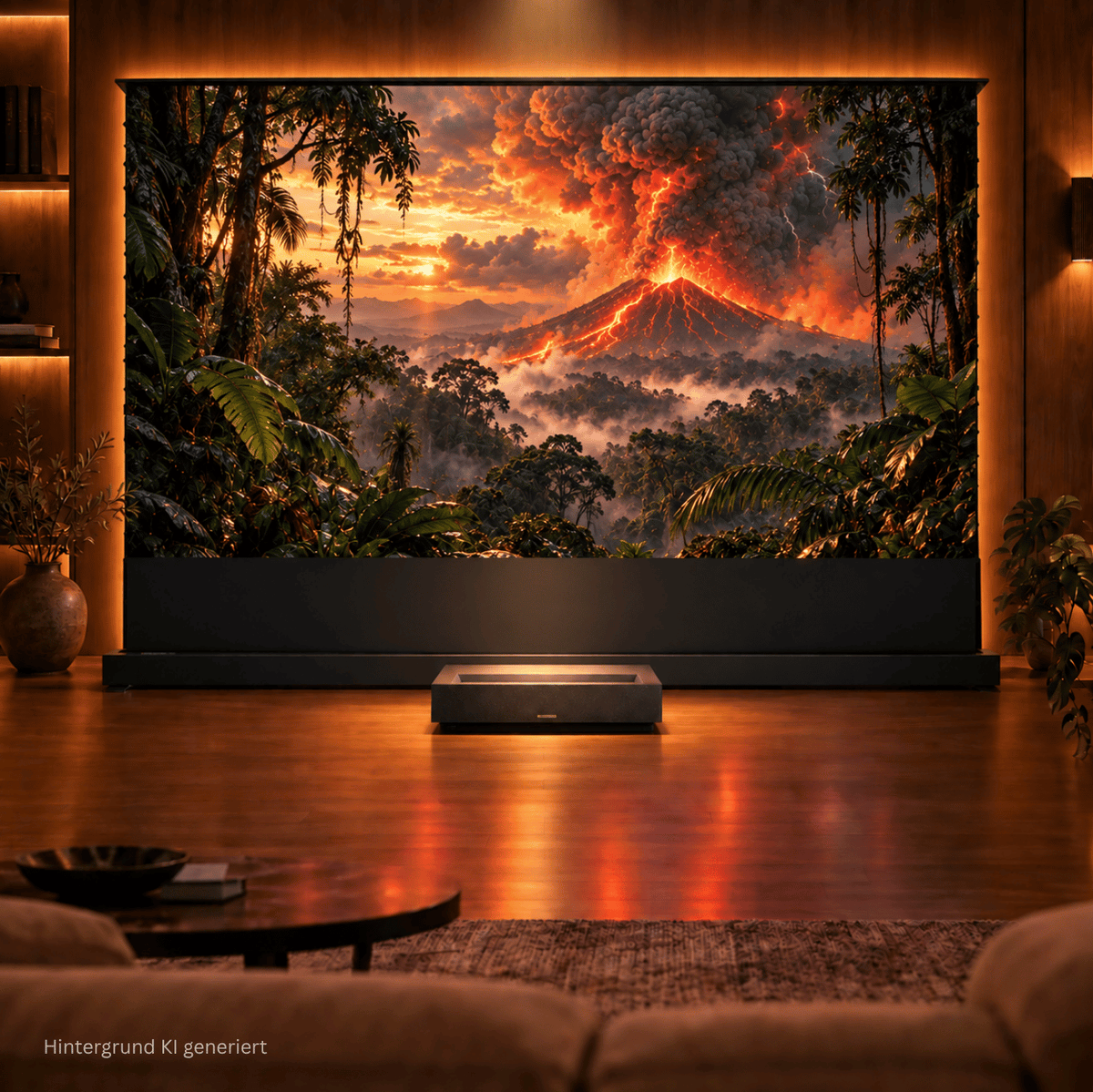




What really matters when it comes to a projector screen?
The selection of projection screens on the market is enormous, but the differences in image quality are often only apparent upon closer inspection. To find the right screen, you need to understand technical factors that go far beyond a simple "white sheet." A high-quality solution is characterized by physical properties that specifically process the beamer's light and minimize disturbing influences.
The Importance of Gain Factor and Fabric Surface
One of the most important terms when choosing a projector screen is the gain factor. It describes the reflective behavior of the material. A gain of 1.0 is considered a neutral standard; it reflects light evenly in all directions, thus allowing a wide viewing angle for all viewers in the room. Higher gain values concentrate the light more towards the center, which can help support image brightness with lower-luminosity projectors or in brighter environments. A modern projector screen fabric must also have an extremely fine surface structure to reproduce the pixel density of 4k or even 8k projections without loss and without moiré effects.

Flatness: The Be-All and End-All for Sharp Images
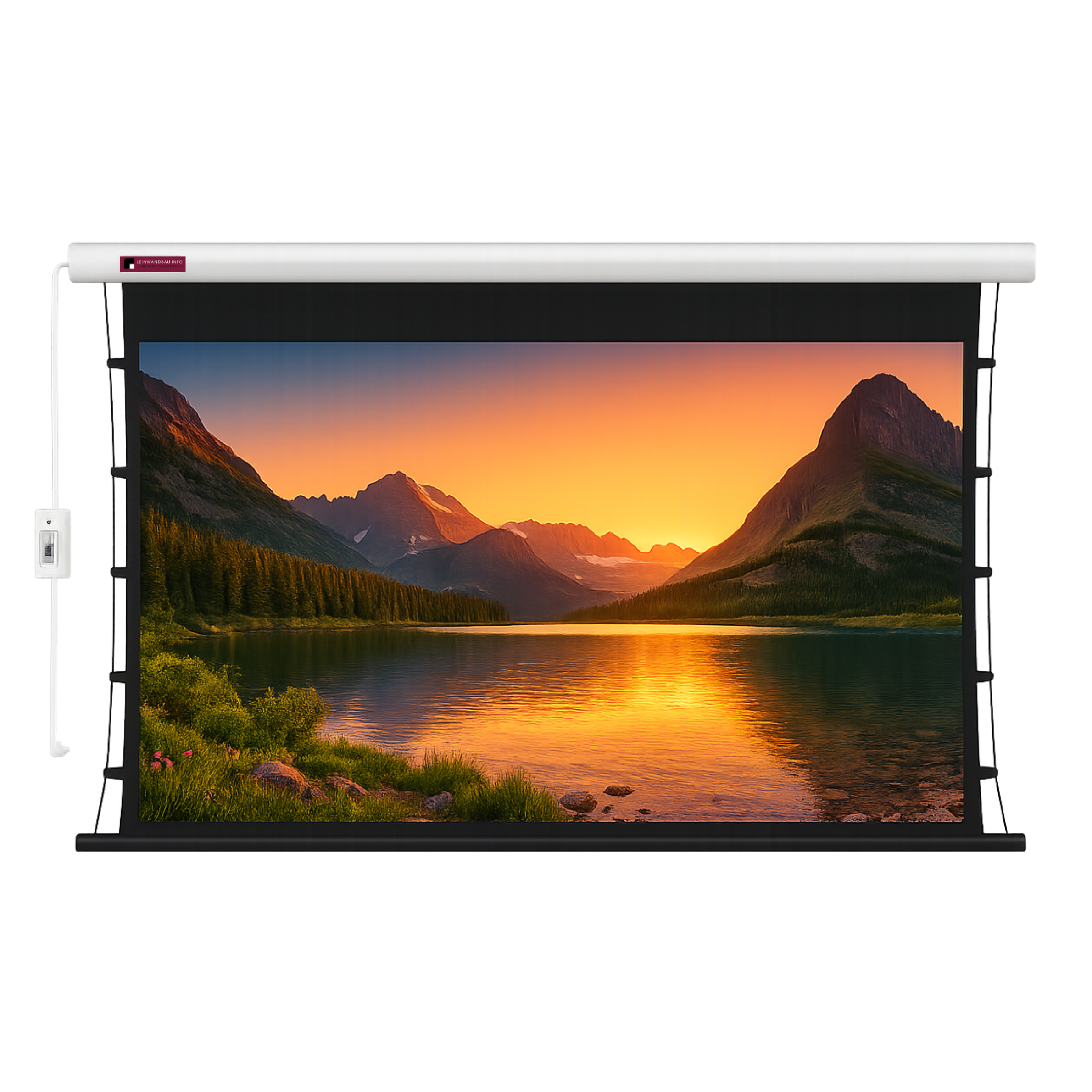
Nothing disrupts immersion more than waves or creases in the image. Perfect flatness is the fundamental prerequisite for a geometrically correct image. While a permanently mounted frame screen is always perfectly taut by design, motorized or manual roll-up systems often require technical support. The tension rope system has proven its worth here, as it pulls the fabric taut at the sides, guaranteeing a levelness that prevents distortions even during critical camera pans.
Masking and Black Level Optimization
Good screens for projector applications feature black masking. This black border around the actual projection surface massively increases the subjectively perceived contrast and black level. It acts as a light trap for stray light and ensures that the human eye perceives the image as significantly more three-dimensional and vibrant.

How to choose the right screen size and aspect ratio?
Planning the dimensions is a crucial step for the future comfort of your home theater room. A screen that is too large can be tiring in a small room, while a screen that is too small will not create the desired "immersive feeling."
Optimal viewing distance to screen size
The ideal screen size is directly related to the viewing distance. A common rule of thumb for modern 4k projections states that the distance should be approximately 1.2 to 1.5 times the image width. For a 120-inch screen (approx. 265 cm wide), a distance of about 3.2 to 4 meters would be ideal. This allows you to take in the entire image without having to move your head, while still enjoying the full detail of UHD content.
Understanding aspect ratios: 16:9, 21:9, or multi-format?
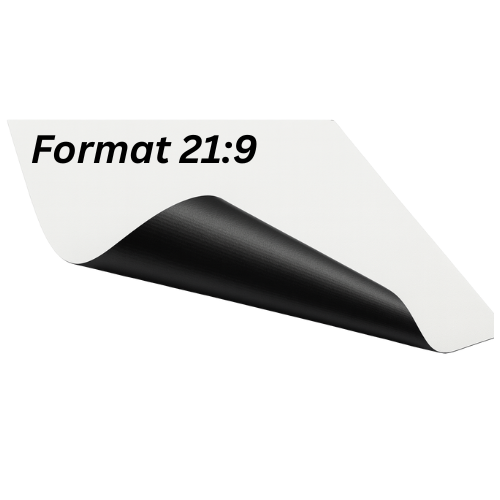
Today, customers most commonly choose the 16:9 format, as it is the standard for TV series, sports broadcasts, and most video games. Pure cinephiles, who primarily watch feature films, often prefer the wider 21:9 (Cinemascope) format to avoid the typical black bars. For maximum flexibility, we also offer motorized screens that can accommodate various formats.
Considering room height and ceiling condition
Before ordering a screen for projector systems, accurately measure the room height. Ceiling mounting often requires an additional drop (black area above the image) to bring the image to ideal eye level. If you have a suspended ceiling, a special recessed ceiling installation is the most aesthetic solution, where the casing becomes completely invisible when not in use.
Differences between the various screen types in conjunction with the projector
Depending on the desired room usage and technical requirements, different projection screen designs are available.
Fixed Frame Screens: The Stationary Reference for Enthusiasts
The fixed frame screen is the first choice for any dedicated home cinema room. Since the fabric is permanently stretched taut in an aluminum frame, it offers the best flatness for life. It is mechanically uncomplicated, durable, and elegantly blends into the room as a fixed visual element.
Electric Screens: Luxury and Comfort in the Living Room
An electric screen (or motorized screen) is the ideal solution when the room is to be used multifunctionally. Via remote control or an automated trigger, the screen only extends from its casing when it is truly needed.
Mobile Solutions: Tripod Screens and Floor Screens
Portable solutions like tripod screens or modern mobile screens provide maximum flexibility. A floor screen can be easily placed in front of the projector and pulled upwards, making it ideal for rented apartments or temporary use. These are excellent for presentations in the office, conference rooms, or even for mobile use outdoors.
Rear Projection Projectors: A Special Niche
Rear projection projector technology uses
special screens where the projector is placed behind the screen. This is
particularly popular for shop window presentations or large events to
completely avoid shadows cast by people in front of the screen.

Which screen is suitable for which projector and which ambient light?
Not every projector harmonizes with every screen. The interaction between the light source and ambient room brightness is the absolute key to success.
ALR and CLR: High-Contrast Solutions for Bright Rooms
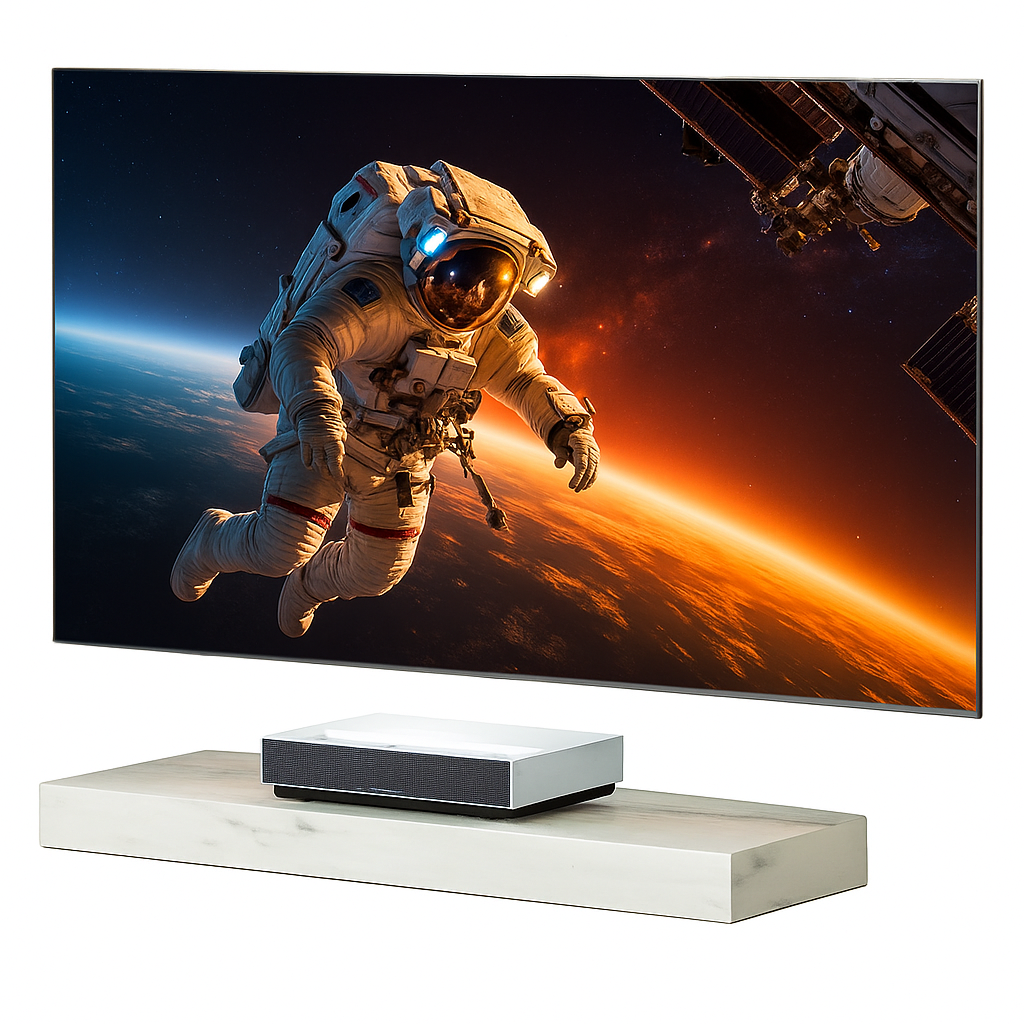
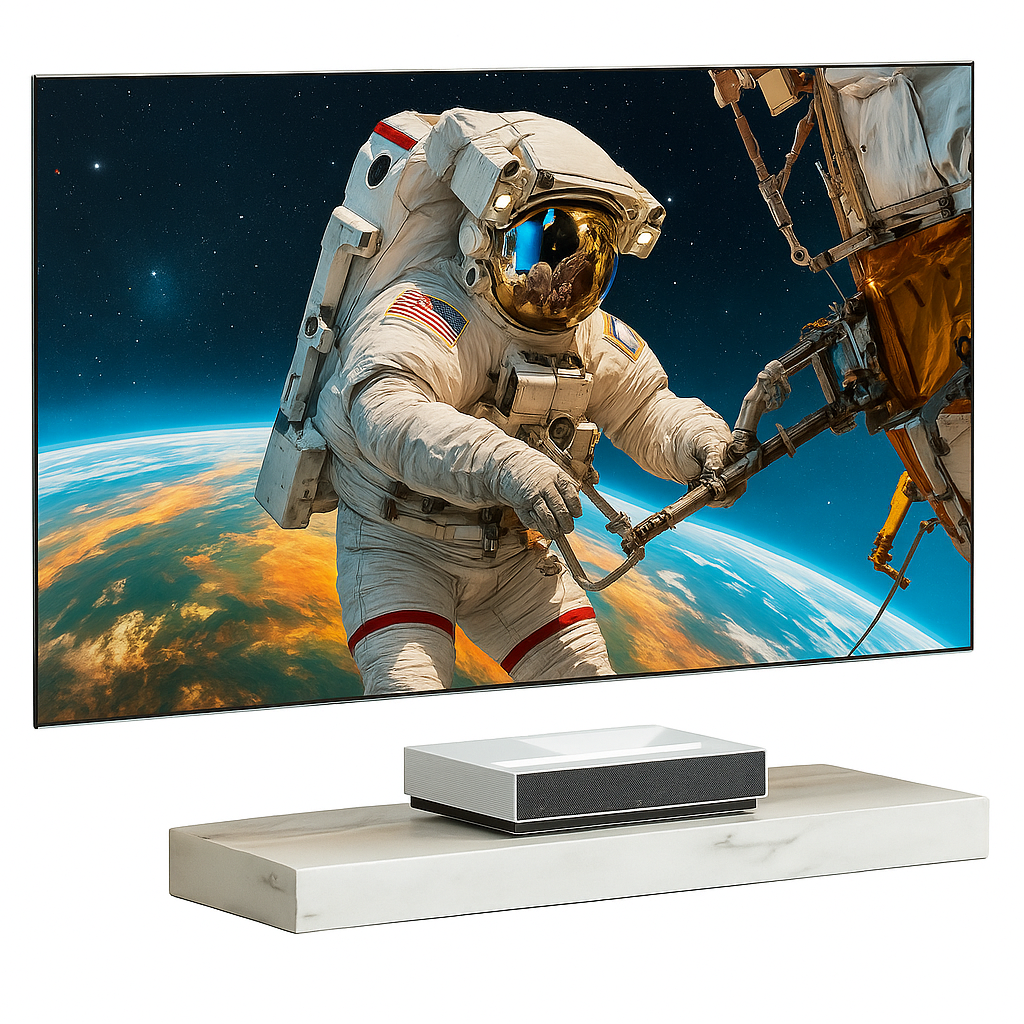
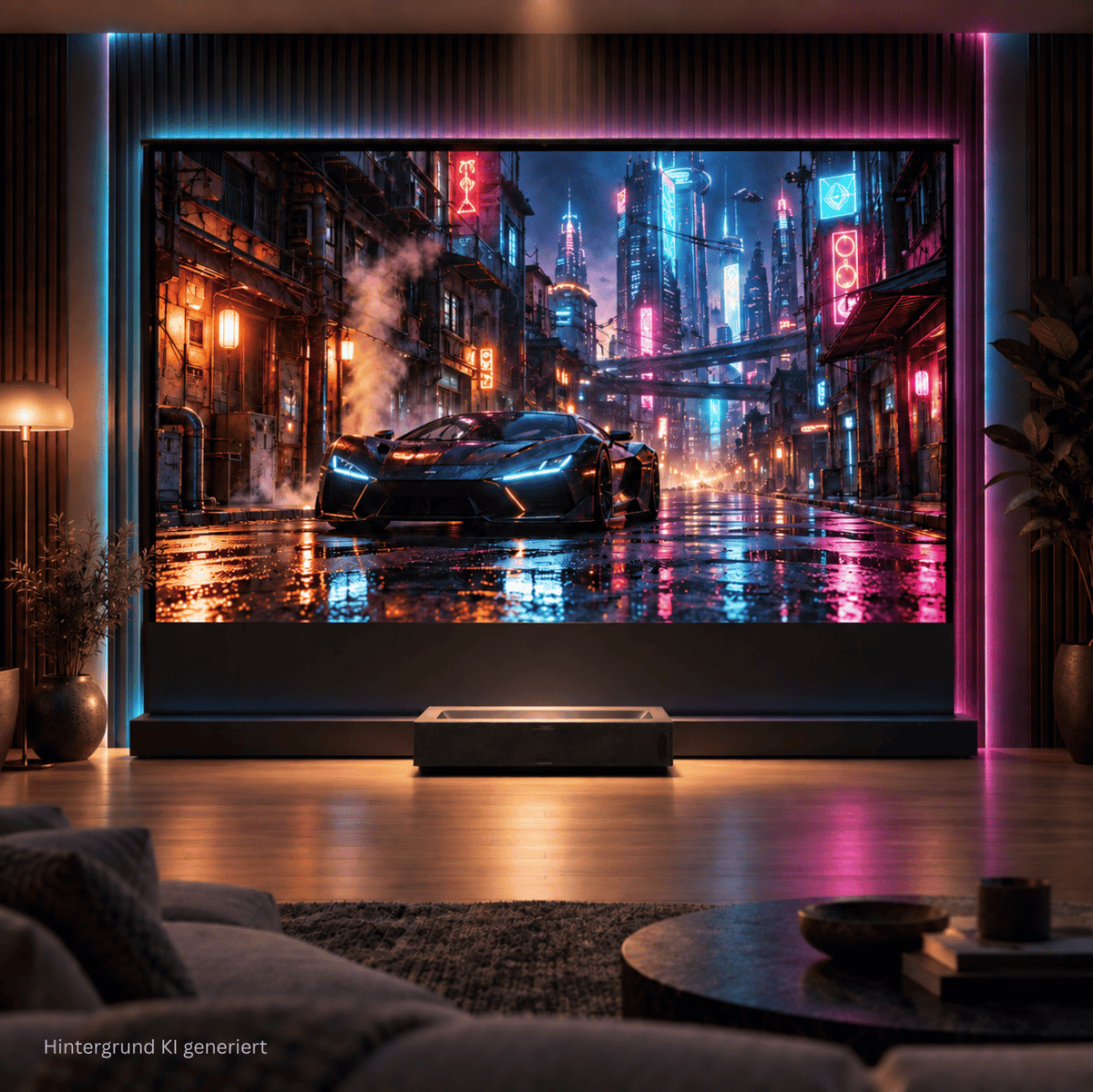
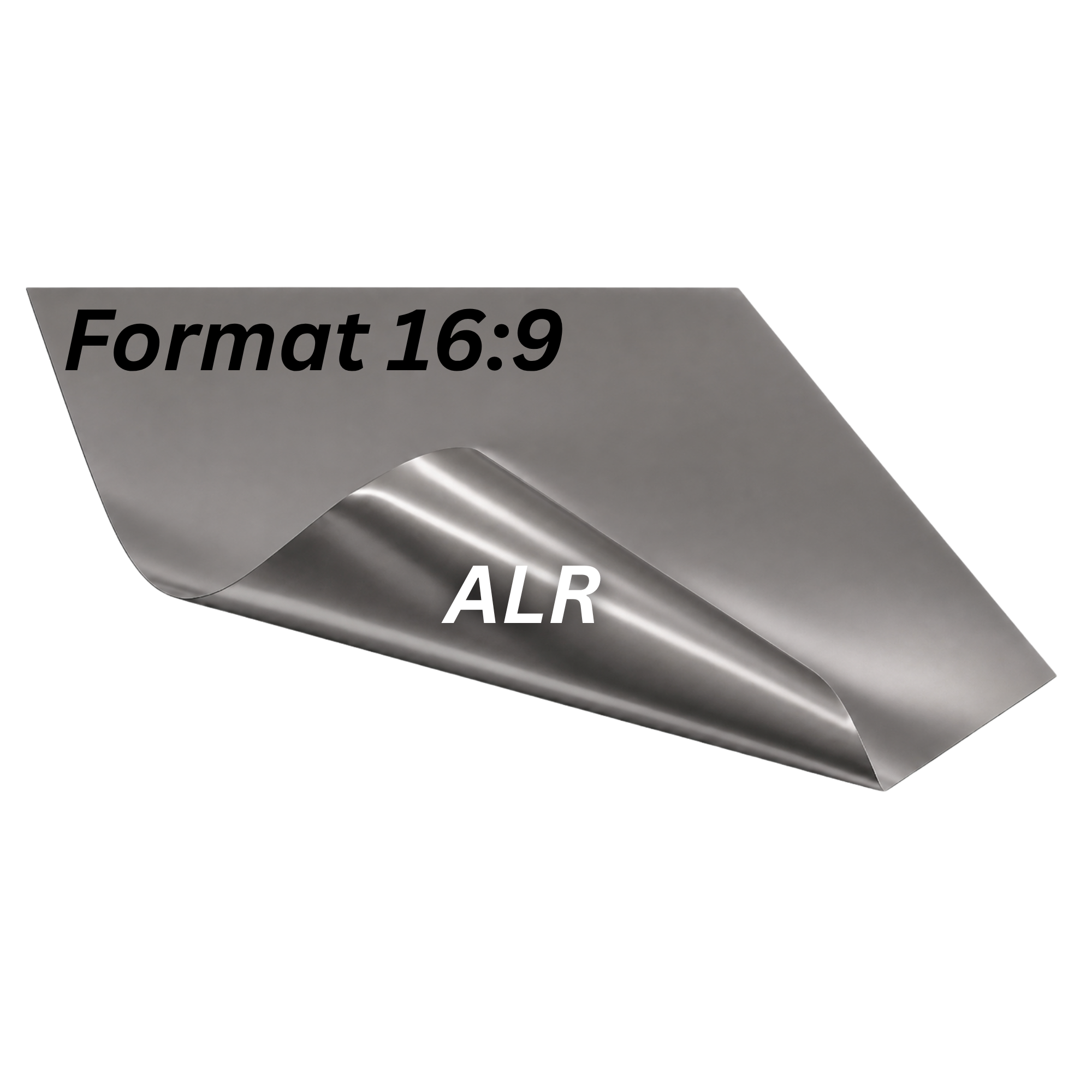
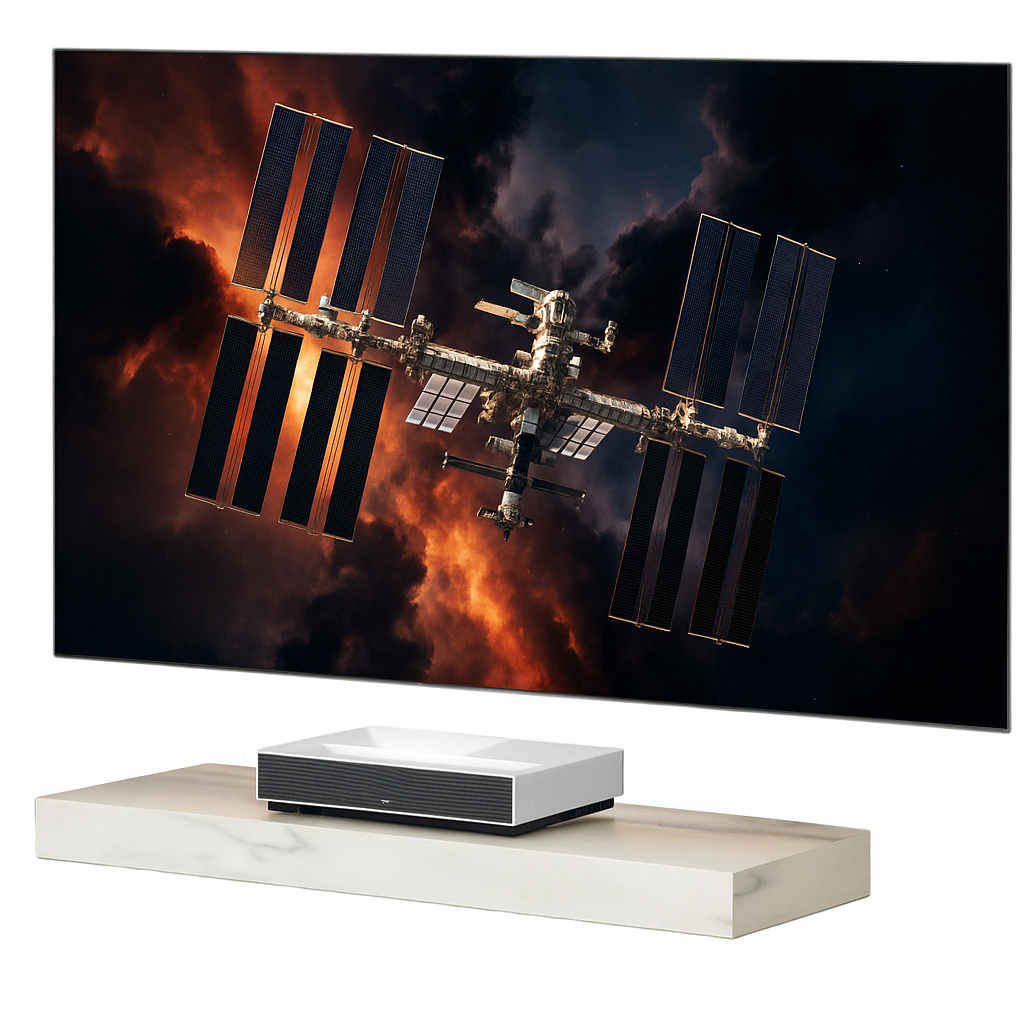
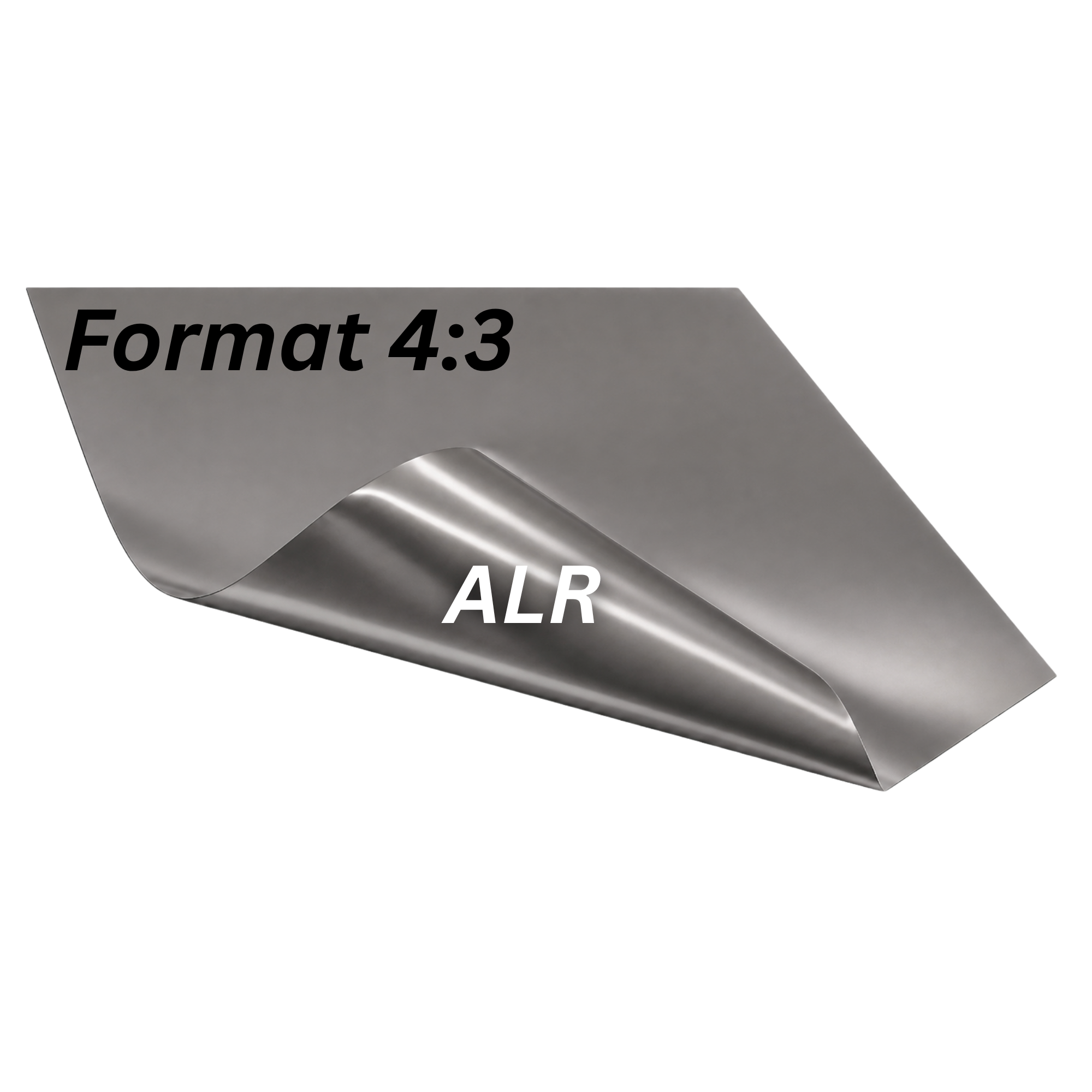
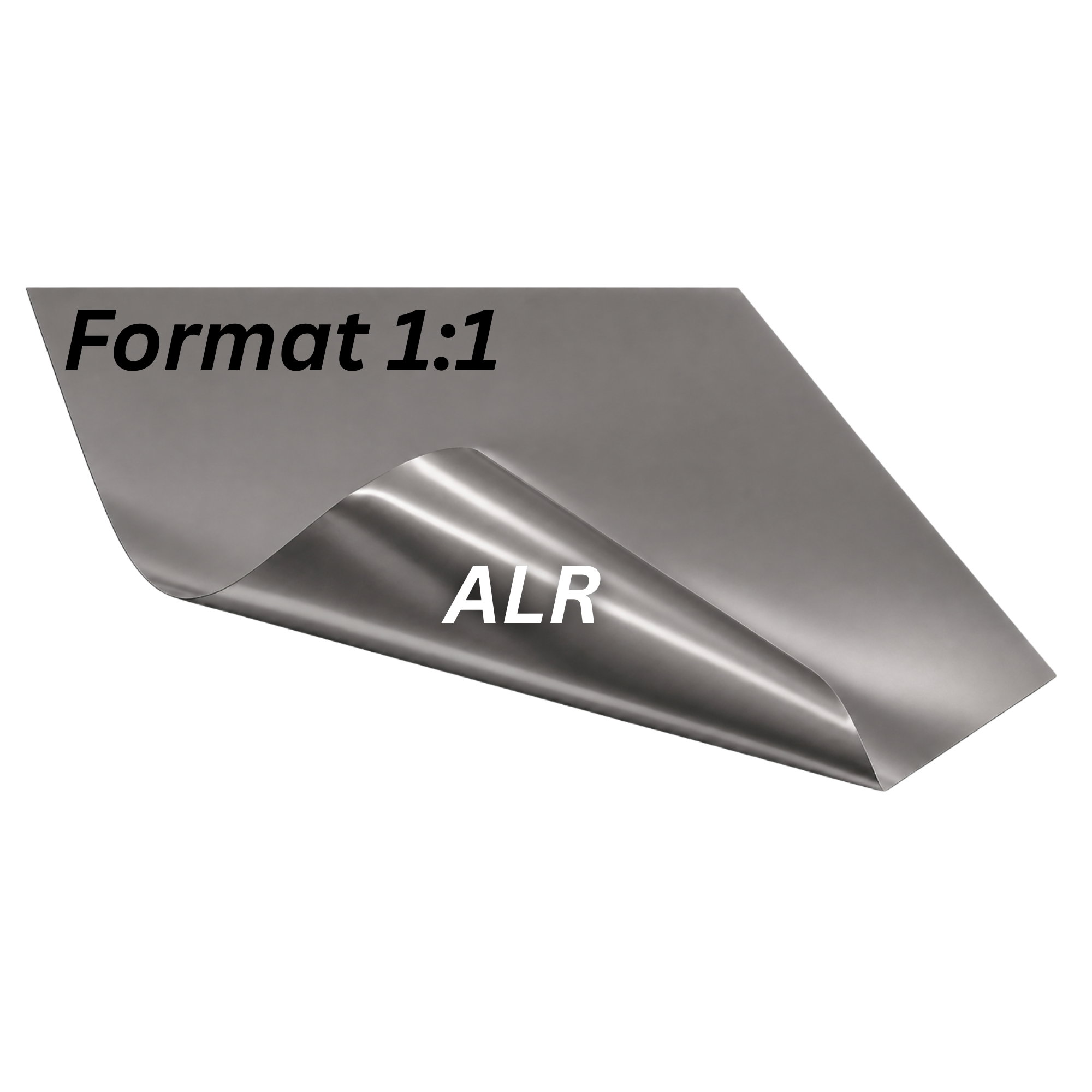
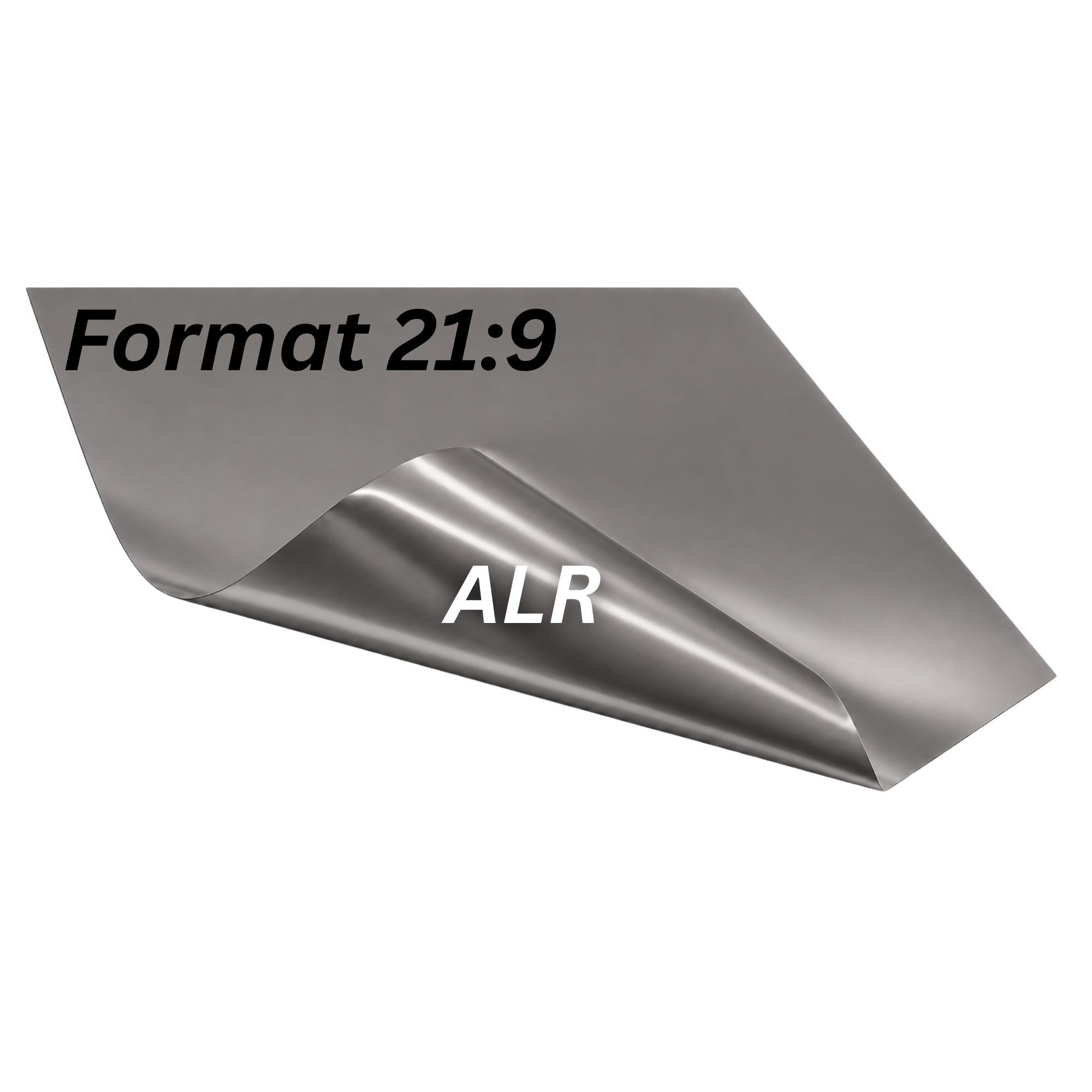
In modern living rooms with a lot of ambient light or bright walls, a conventional white screen is often overwhelmed, as it also reflects distracting light, leading to a dull image. This is where Ambient Light Rejecting (ALR) screens come into play. These absorb a large portion of scattered light and preferentially reflect the projector's light towards the viewer. Specifically for UST (Ultra-Short Throw) projectors, there are specialized CLR screens that filter light from ceiling lamps and only amplify the projector light coming steeply from below.
Classic Matte White for the Optimized Home Cinema Room
If your room is completely darkened, a classic matte white screen offers the most accurate color fidelity and the widest viewing angle. Without distracting ambient light, a gain of 1.0 can fully demonstrate its strength here and deliver an image like in a real cinema.
Synergy with Laser TVs and 4K Technology
Modern laser projectors have enormous light output but benefit greatly from screens with high color purity. When choosing a screen for projector systems with a laser source, you should look for 4K or 8K certification to ensure that the fine pixel structure is not impaired by too coarse a screen weave.

Assembly and placement of the canvas in the room
Even the best high-quality projection solution is of little use if the installation is not precise.
Wall Mounting vs. Ceiling Mounting
Most screen housings allow for both options. Ensure that the screen hangs perfectly level to avoid keystone distortion, which would be cumbersome to correct digitally. Stable anchoring is essential, especially for heavy motorized screens with tension systems.
Finding the Optimal Projection Height
The bottom edge of the screen should ideally be at eye level for seated viewers. Placing it too high (as is often seen in conference rooms) quickly leads to neck pain in a home cinema and diminishes enjoyment during long films.
Cable Management and Integration
For motorized systems, you should plan the power supply and control early on. Many of our systems feature wireless triggers that automatically extend the screen as soon as the projector is turned on. This ensures a seamless and professional home cinema experience.
FAQ
Which screen is right for my projector?
This largely depends on the light output (ANSI lumens) and the design of your projector. For standard projectors, white or ALR screens are ideal. For ultra-short-throw projectors (laser TV), you absolutely need a CLR screen with a special louver structure to avoid light loss and distortions.
What distance do I need between the projector and the screen?
The required distance is determined by your projector's throw ratio. We would be happy to help you with the exact calculation based on your specific model to achieve the desired image size down to the millimeter.
What is the difference between an ALR and a regular screen?
A normal screen reflects light diffusely in all directions. An ALR screen (Ambient Light Rejecting) is a specialized high-contrast surface that specifically absorbs light from the sides and above, primarily directing the projector's light to the viewer. This ensures significantly better black levels and contrasts in rooms that are not completely darkened.
Can a projector screen be used in daylight?
Yes, provided you use a specialized daylight screen (ALR or CLR) in combination with a high-brightness projector. While normal screens produce a dull image in daylight, high-contrast screens keep the contrast stable and enable an impressive viewing experience even in the afternoon.