Daylight
projectors, the right screen for a bright, high-contrast image
For a long time, the true cinema experience was tied to darkened rooms. Modern daylight projectors break with this limitation and allow for brilliant images in daylight. However, a high-performance projector alone is not enough for maximum image sharpness, rich contrasts, and vivid colors.
The decisive factor is the perfect symbiosis with a matched contrast screen that effectively blocks out ambient light. At Leinwandbau.info, we use our sound expertise to show you how to optimize your setup and unleash the full potential of your home cinema in bright rooms. Discover in our guide why the right screen is the most important factor for your ultimate entertainment experience.


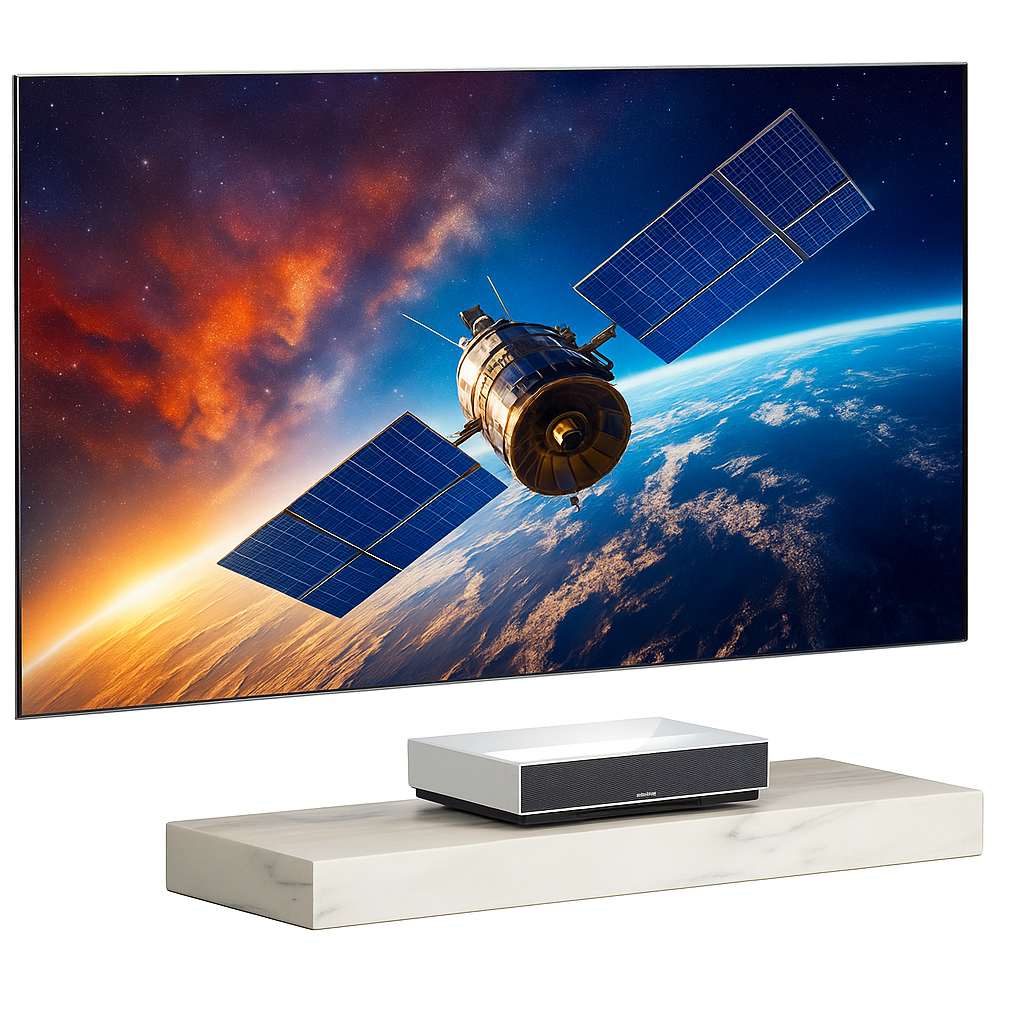
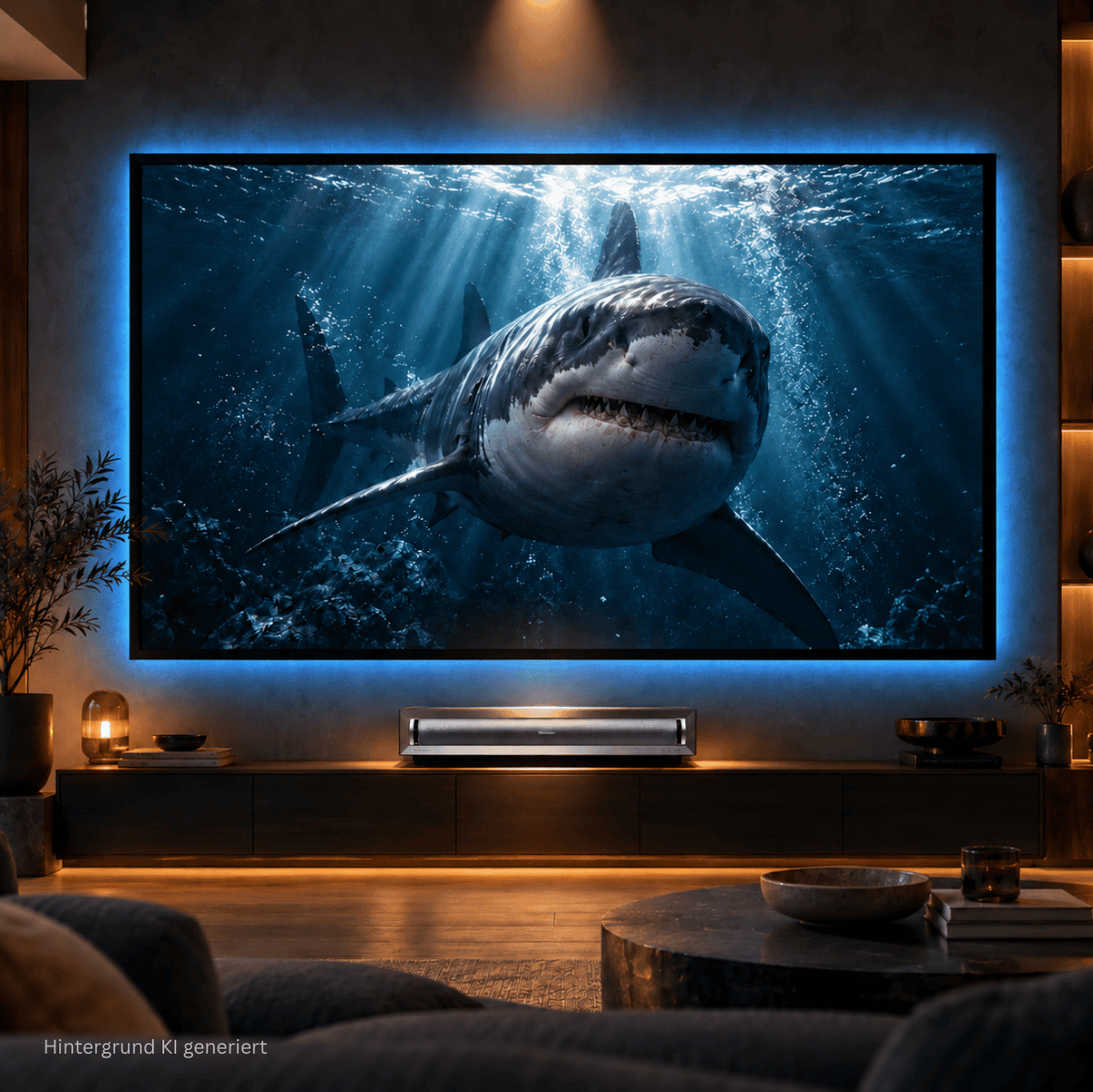
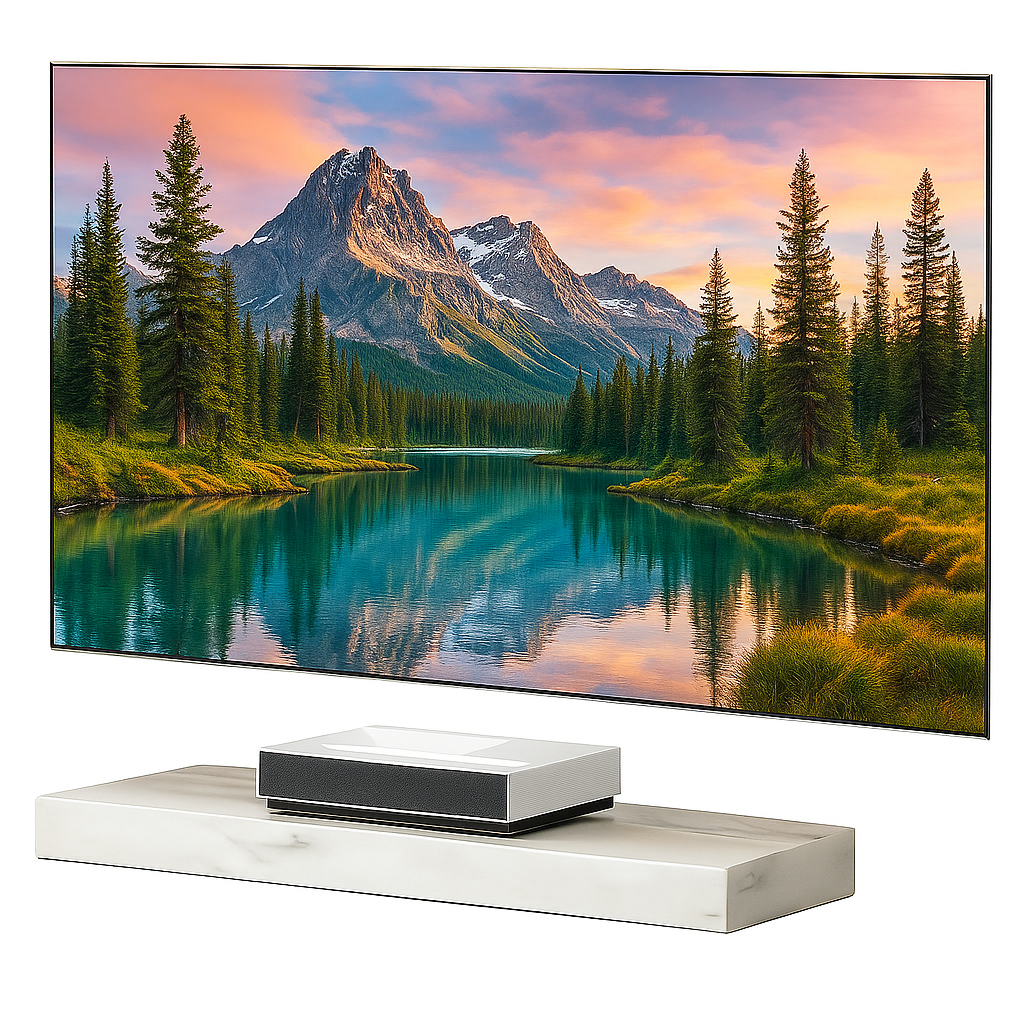
Daylight
projectors at a glance: what really defines a bright projector
The term daylight projector has
established itself in the professional world and in high-end home entertainment as a clear
quality feature for projectors that possess an above-average
light output and were specifically designed for difficult lighting conditions.
While classic home cinema devices intended for an optimized,
completely darkened basement are primarily designed for maximum native black levels and
finest color gradations in dark scenes, the focus of a genuine
daylight projector system is on the ability to prevail against
omnipresent ambient light. This technological
assertiveness is achieved through highly efficient illuminants, optimized optical
blocks, and state-of-the-art panel architectures that bundle light without significant
scattering losses.
As you browse our range and
analyze current market trends, you will encounter various
light source technologies, each with specific characteristics and
which form the basis for daylight projector use:

Ultra-High Performance (UHP) lamps
These classic lamps offer very high raw brightness at a comparatively low purchase price. However, they have a limited lifespan, generate a lot of waste heat, and lose brightness continuously over their operating life, which makes regular lamp replacements necessary.

Modern LED light sources
They are characterized by an extremely long service life of often over 30,000 hours, instant readiness for operation, and outstanding color purity. However, they reach physical limits in terms of maximum peak brightness with very compact housing dimensions, which is why they are primarily found in the lifestyle and smart projector segment.

Advanced Laser Systems
A modern best daylight projector today uses almost exclusively a laser light source, often in the form of blue laser diodes with a phosphor wheel or as a high-end RGB triple laser. This technology offers you gigantic brightness, extreme longevity, and keeps the light output absolutely constant over many years without the colors degrading.
Why
the projector alone isn't enough; the screen is the deciding factor in daylight
A widespread misconception among
beginners is that buying the brightest projector is enough to solve all
ambient light problems in a room in an instant. The
physical reality of optical projection, however, is different: the
projector merely emits light, but the final image quality only emerges
through the way in which this light is processed by the surface
it hits. If this surface is not capable of intelligently filtering
and directionally reflecting the incoming light, the power of the best light source
is wasted unused in the room.
ALR and CLR screens: this is how ambient light is blocked out
To consistently prevent a dramatic loss of contrast in
bright rooms, specialized high-contrast screens are used in modern living rooms,
which filter light based on its
angle of incidence. A daylight screen uses complex,
multi-layered surface structures to stabilize the image:


The ALR (Ambient Light Rejecting) Screen
This material is designed to block or absorb stray light entering from the sides. The surface consists of microscopic filters that absorb horizontal light, while the light from the projector arriving from the front is reflected directionally back to the viewer. This ensures that the image remains high-contrast even when windows are open at the side.

The CLR Screen (Ceiling
Light Rejecting)
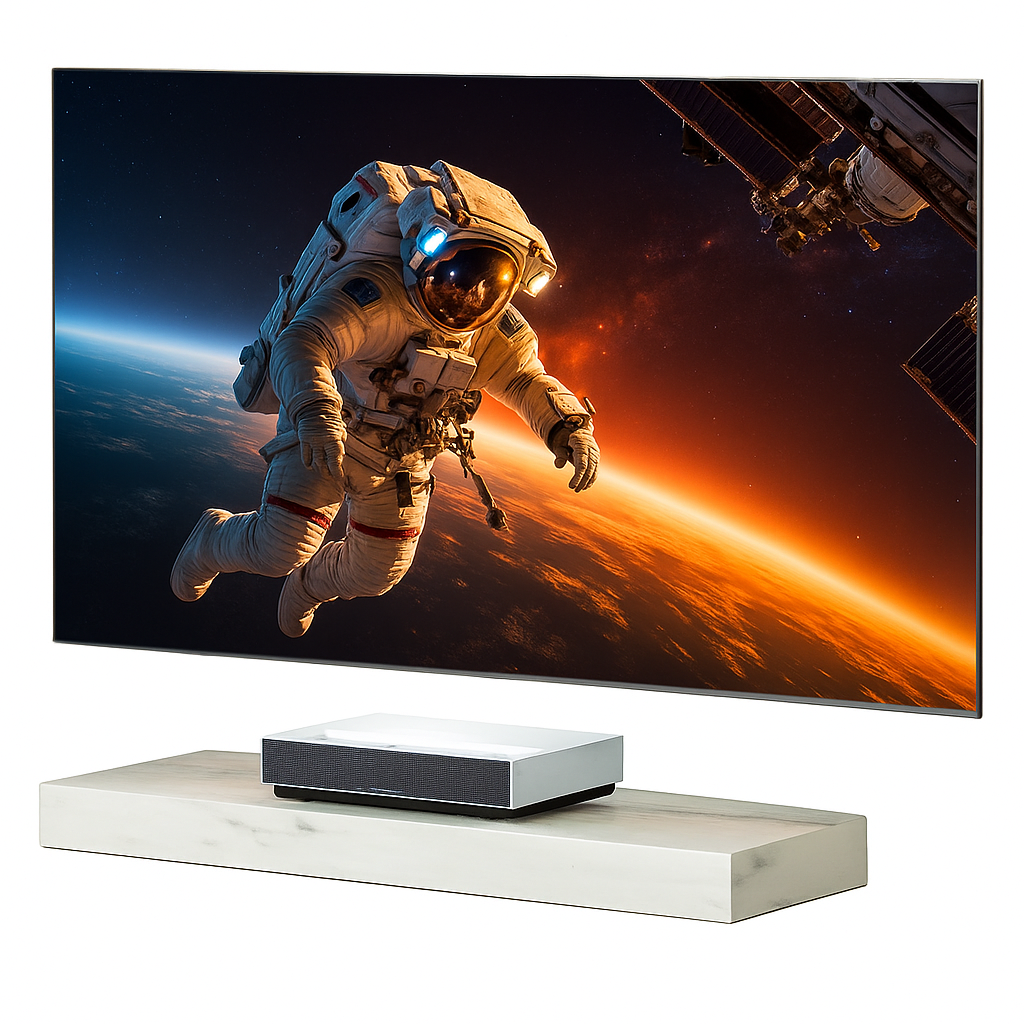
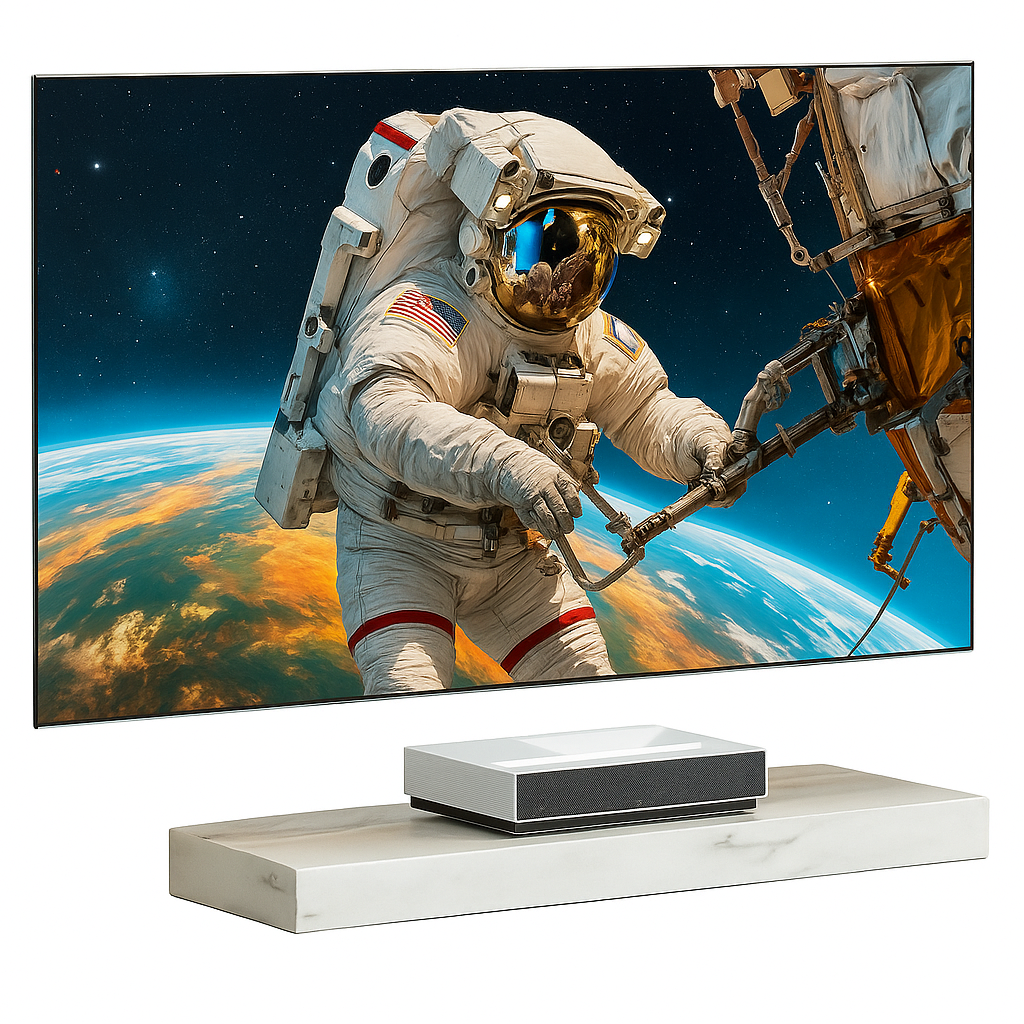
For modern ultra-short-throw projectors (LaserTV), this fabric is the absolute cutting edge. The material of such a daylight-capable projector screen features a microscopic, triangular lamellar structure. These prisms have a black, absorbent top side and a bright, reflective bottom side. The light from the short-throw projector, coming steeply from below, hits the bottom side and
travels directly to the viewer's eye. Conversely, distracting ceiling light or sunlight entering from above hits the black top side and is completely absorbed.
Correctly classifying ANSI lumens, brightness, and contrast
The most important and legally binding
unit of measurement for a projector's brightness is the standardized
measurement method in ANSI lumens. A solid ANSI lumen projector
for use in a bright living room should have a light output of at least
3,000 to 4,000 ANSI lumens in order to maintain fine image details against
daylight. For extremely demanding scenarios, such as large-screen projection in commercial conference rooms with incomplete
blackout or outdoors at events, professionals opt for specialized
high-performance devices.
A 10,000 lumen daylight projector offers such immense light output that sharp images are produced even on very large screen diagonals, easily holding their own against direct ambient light. In the private sector, too, every independent daylight projector test shows that higher brightness massively increases daily flexibility, as the need to close blinds is completely eliminated.
However, it is an irrefutable physical
fact that the sheer daylight projector lumen count only represents half
the truth about image quality. An extremely high luminous flux is of little use in a
home cinema if the image, in turn, does not have sufficient contrast.
Contrast describes the difference in brightness between the brightest white and the darkest black.
If a projector emits an extreme amount of light, it inevitably brightens the dark areas of the image as well,
unless the optical engine and panel are perfectly calibrated.
The result is an image that may be bright,
but looks dull, washed out, and lacks depth. To resolve this optical dilemma,
the projection surface must never be neglected – it must be integrated into the overall system as an active optical filter.
Why a standard white screen washes out in daylight
A conventional matte-white screen
acts physically as a diffuse scatterer (a so-called
Lambertian reflector). It reflects all incident light
completely evenly and omnidirectionally back into the room –
regardless of whether this light comes from the projector's lens
or enters as intrusive sunlight through the window.
If you operate a
projector in daylight
on such a white surface, the light sources inevitably mix.
Since a white screen reflects daylight values
diffusely, it naturally glows white in a bright room.
It is therefore impossible for the projector to render
dark areas or true black, because the black in the image can never be darker than the
unprojected screen illuminated by the ambient light. The image washes out completely,
loses all depth, and the colors appear pale, flat, and
unnatural, which massively impairs the viewing experience. Only a
specialized screen for daylight applications breaks this
vicious physical cycle.
Choosing the right screen for your daylight projector
Selecting the optimal projection surface requires precise alignment with the room's characteristics, the exact placement of the projector, and primary day-to-day usage habits. The goal is to balance the physical parameters to create a harmonious, high-contrast, and eye-friendly overall image that remains captivating over many hours.
Gain, screen material, and viewing angle
The gain factor describes the reflection behavior of the material compared to a standardized reference surface. When planning for bright rooms, you will often encounter the term "high-gain screen" in forums and professional consultations. These screens use special metallic or crystalline coatings to strongly focus the incoming light and direct it forward toward the viewer. This provides a dramatic increase in perceived image brightness in the center, but comes with a noticeable physical compromise: the viewing angle narrows significantly. Viewers sitting at an angle to the screen see a significantly darker image than those in the center; furthermore, an unsightly "hotspot" effect (an overexposed brightening in the center of the image) can occur.
For modern living room applications, a specialized daylight screen with a moderate, slightly absorbent gain value (often between 0.6 and 0.8) is therefore usually recommended. These screens use complex, multi-layer surface structures to massively increase contrast and black levels without restricting the viewing angle too much. The goal is homogeneous light distribution over the entire surface so that all guests on the couch can enjoy a uniformly brilliant, color-accurate image from every seat.
Daylight projector in the living room and for business use
The requirements for a daylight-capable large-screen system differ drastically depending on whether the installation is in a private living space or a professional business and commercial environment.
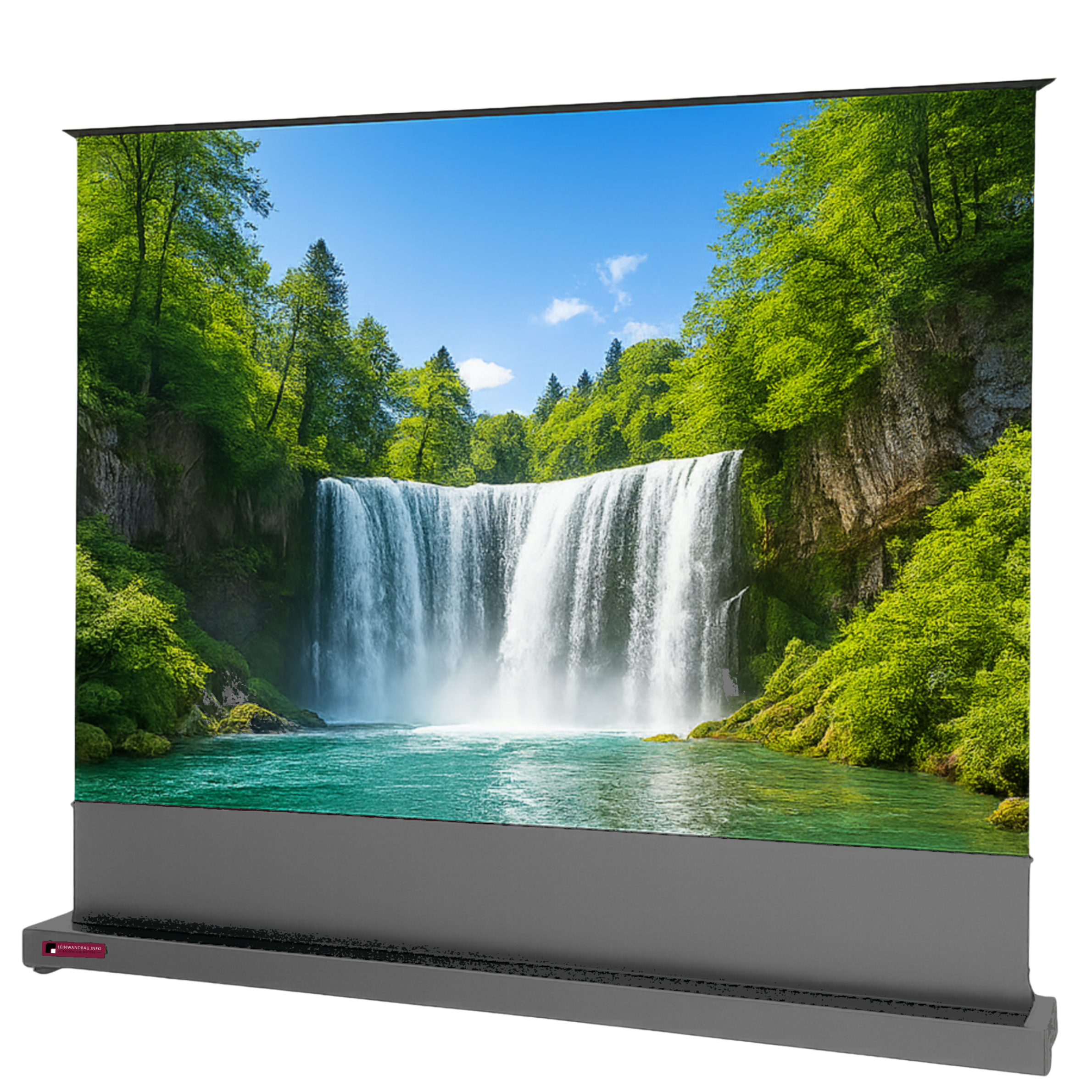
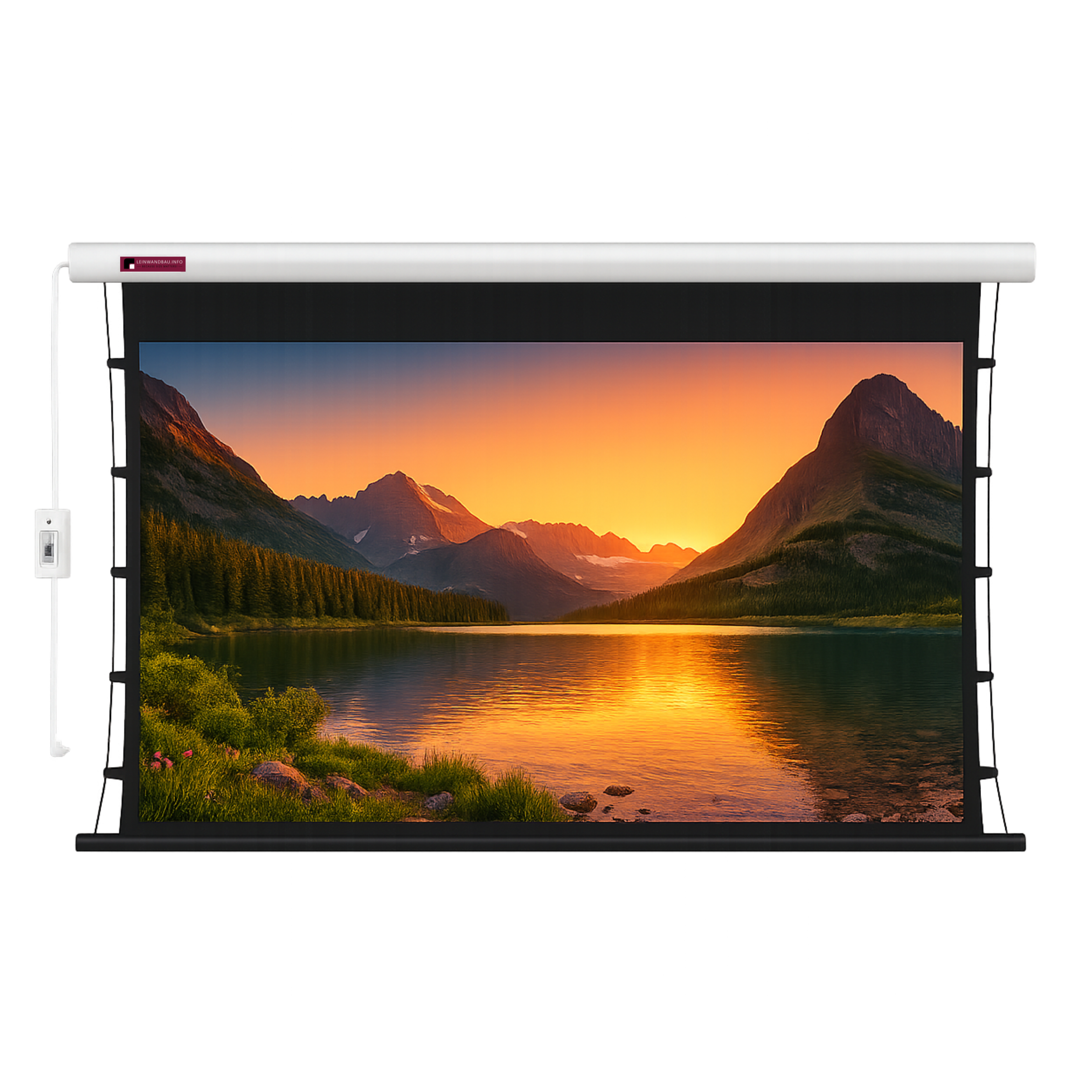
A modern living room daylight projector must offer a high degree of flexibility, aesthetics, and acoustic discretion. Beyond mere brightness, the focus here is primarily on excellent color fidelity (such as coverage of the demanding DCI-P3 color space), precise HDR processing for fine brightness gradations, and quiet cooling. The projector often acts as a full-fledged, elegant TV replacement for the entire family, which is why it must blend harmoniously with the decor. Motorized floor-up screens or inconspicuous ceiling cassettes ensure that the technology remains invisible in everyday life.
In commercial business use, however, the uncompromising demand for maximum, long-lasting light intensity and absolute operational reliability dominates. In large conference rooms, brightly lit lecture halls, or trade fair halls, complex spreadsheets, fine text, and CAD graphics must be perfectly legible from a great distance, even under aggressive, direct fluorescent lighting. The same applies to the demanding field of outdoor daylight projectors: anyone wanting to realize an exciting public viewing for summer tournaments on a terrace, in a beer garden, or in their own garden requires enormous performance reserves to fight against natural ambient light and keep the contrast stable.
Buying a daylight projector and screen as a set
For many customers, purchasing a perfectly matched bundle is the safest, most convenient, and most economically sensible method to exclude technical incompatibilities and consequential bad purchases from the start. When you purchase a pre-configured daylight projector/screen package, you benefit directly from the intensive preparatory work of experienced optical experts who have tested the components in the laboratory.
The combination of the brightest projector and an unsuitable screen can, in the worst case, lead to extreme visual irritation. Modern laser light sources, especially sophisticated RGB triple lasers, tend to produce a micro-fine shimmer on certain screen structures (the so-called laser speckle effect). A professionally assembled set ensures that the projector's light output harmonizes precisely with the absorption and reflection behavior of the screen to avoid hotspots and guarantee crystal-clear presentation. Furthermore, such a complete set usually offers a noticeable price advantage over purchasing the components individually and significantly simplifies shipping logistics.
Call to action
Setting up a daylight-capable large-screen system is a demanding project that requires an exact analysis of the structural conditions. Every window, every ceiling light, the nature of your walls, and the desired seating distance significantly influence the final image result. Do not leave your visual entertainment to chance, vague estimates, or standardized off-the-shelf solutions.
Take advantage of our years of experience in the high-end projection technology segment and let our specialist consultants support you in a comprehensive, honest, and individual manner. We will help you find the perfect interplay of a high-lumen projector and the matching contrast screen for your own four walls, so that your home cinema becomes a lasting source of joy. Contact us today via phone, email, or visit us directly in our showrooms – together, we will create your tailor-made dream cinema.
Frequently asked questions about daylight projectors and the matching screen
What brightness level is required for a daylight projector in the living room?
For a clear, high-contrast image display in a normally lit living room in the afternoon, the projector should have at least 3,000 to 4,000 ANSI lumens. Lower values will result in the image fading against the incoming daylight. In combination with a suitable ALR or CLR screen, you will achieve a razor-sharp result in this brightness class.
What is the difference between a daylight projector and a standard home cinema projector?
The main difference lies in the focus of the optical performance. A classic home cinema projector is designed for an optimized, completely darkened room and focuses on maximum black level reproduction and the finest contrasts. A daylight projector, on the other hand, is optimized for maximum brightness and high power against ambient light, so that the image remains color-intensive and vivid even in bright rooms.
How large can the image be with a projector in daylight?
Depending on the projector's ANSI lumen brightness, screen diagonals of 100 to 120 inches are easily achievable in a living room. However, the physical rule applies: the more ambient light there is in the room, the more compact the screen size should be, as the projector's light output is concentrated on a smaller area, making the image appear higher in contrast.
Can a daylight projector also be used on a normal white wall?
While the projector does technically cast the image onto the wall, this is not recommended in terms of picture quality. A normal wall diffuses light and also reflects all ambient and daylight. As a result, the image inevitably looks washed out and flat. A special ALR or CLR screen, on the other hand, specifically filters out distracting ambient light and ensures an image with rich black levels and high contrast.